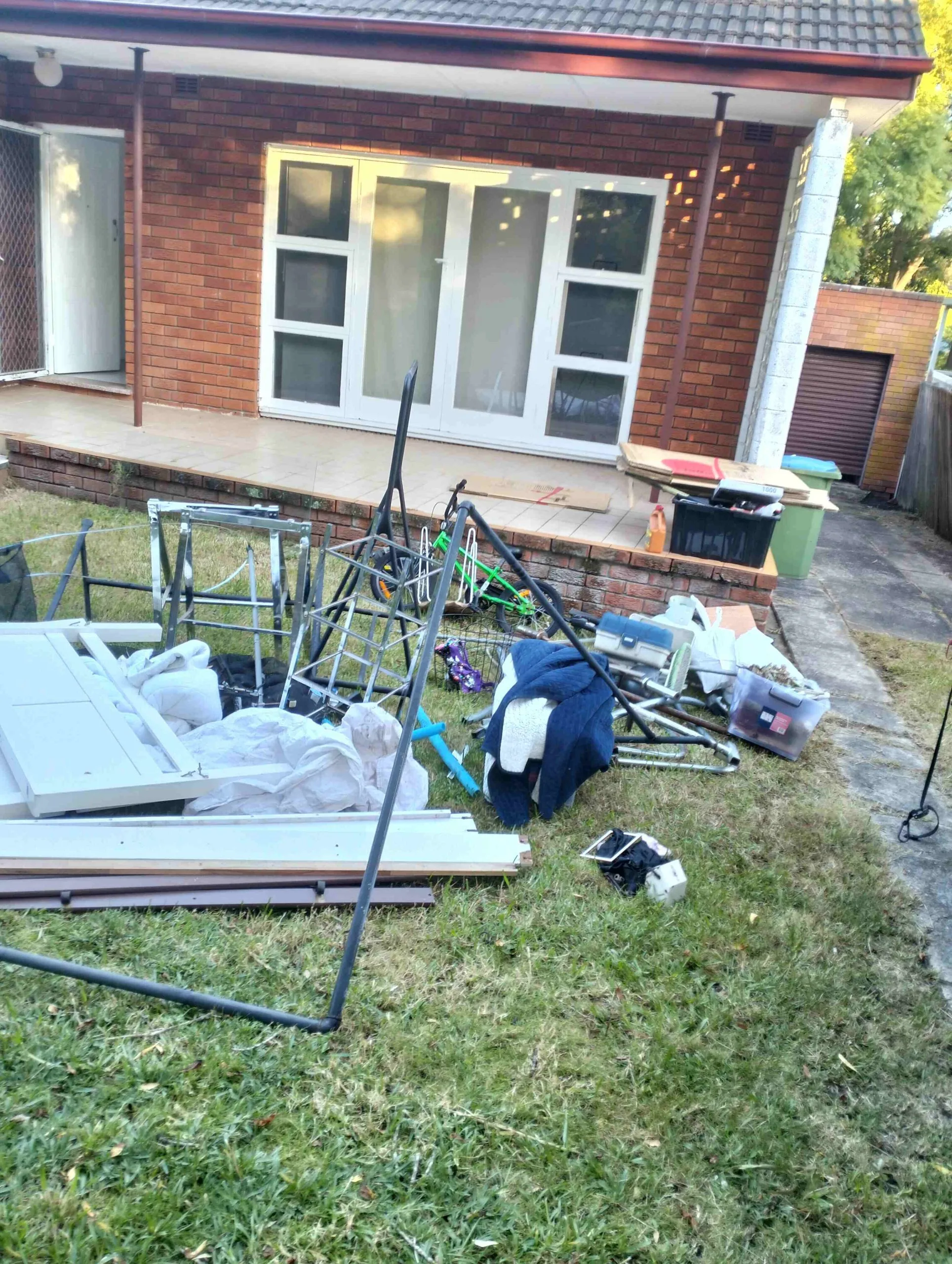
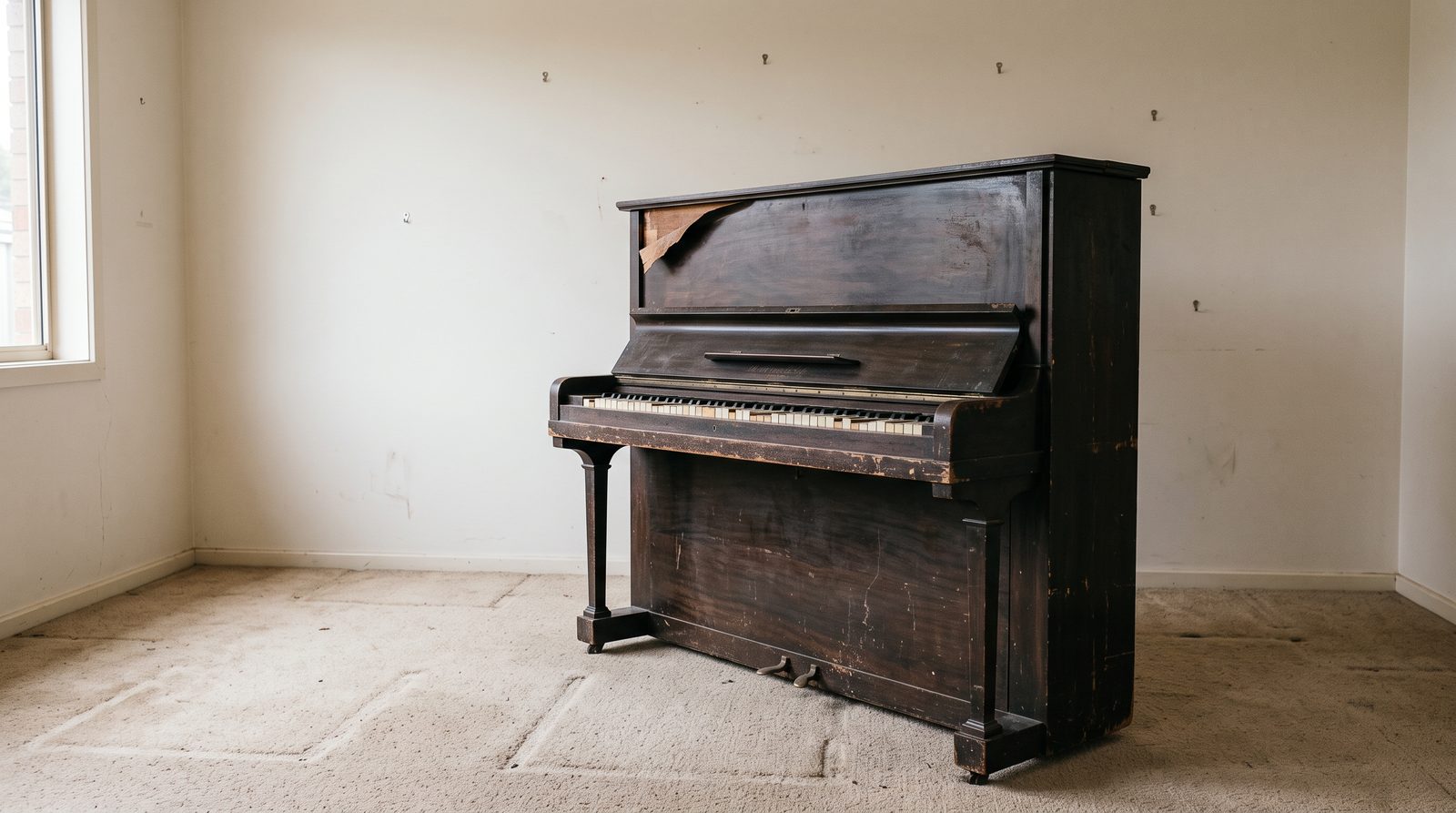
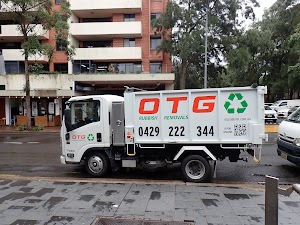
Residential rubbish removal covers the collection and disposal of household items you can’t put in a council bin: old furniture, white goods, renovation rubble, garden waste, and accumulated clutter. A team collects directly from your property, loads everything onto a truck, and hauls it away the same day. No skips, no council wait times, no heavy lifting on your part. This guide covers the household side of our rubbish removal in Sydney.
Key Takeaways
- Residential removal covers furniture, appliances, garden waste, renovation debris, and general household clutter.
- Services operate at apartments, houses, and body corporate buildings across the North Shore and Eastern Suburbs.
- Same-day pickup is available — book early to secure a slot.
- Households and councils generated 543 kg of municipal solid waste per person in 2020-21 (DCCEEW, National Waste Report 2022), and the bulky part of that can’t go in a standard bin.
For a full overview of available services, see the OTG rubbish removal services page.
Residential rubbish removal handles the items that sit outside council collection scope. According to the Department of Climate Change, Energy, the Environment and Water’s National Waste Report 2022, households and local government activities generated 543 kg of municipal solid waste per person in 2020-21. Bulky goods are the part of that a standard kerbside bin simply cannot take.
Common items covered include:
Hazardous materials — asbestos, chemicals, and paint — sit outside the scope of a standard residential pickup. If you suspect hazardous materials are present, raise it before booking so the right advice can be given.
OTG does not handle asbestos — it legally requires a licensed asbestos removalist. If your job involves it, tell us when you book and we’ll point you to the right people.
Citation capsule: Households and local government activities in Australia generated 543 kg of municipal solid waste per person in 2020-21, according to the Department of Climate Change, Energy, the Environment and Water (National Waste Report 2022). Bulky household goods in that total — furniture, appliances, and renovation material — are what kerbside collection services are not equipped to handle.
Most residential pickups fall into a handful of predictable situations. Knowing which category applies to your job helps with quoting and scheduling. A house move is the most familiar example, because it usually leaves a load of items that don’t make the trip.
Moving out is one of the most common triggers for a residential removal booking. Items that won’t fit in the new place — or aren’t worth moving — need to go before the final inspection. A same-day collection means you’re not scrambling to arrange multiple trips to the tip. In our experience, end-of-lease jobs benefit most from booking a crew that carries items from inside the property, not just from kerbside.
For urgent situations, same-day rubbish removal in Sydney is available when the timeline is tight.
Garages accumulate years of broken tools, old sporting equipment, cardboard boxes, and forgotten appliances. A clear-out typically fills a significant portion of a truck. The crew loads everything in a single visit, sorting recyclables from general waste at the facility. For dedicated garage jobs, see the detail on garage clean-out services in Sydney.
Renovation projects leave behind materials that are heavy, awkward, and often mixed: broken tiles with timber offcuts, plasterboard with pipe fittings. Council hard rubbish collections rarely accept construction-related material. A dedicated removal service takes the full mixed load without requiring you to sort it first.
After a big pruning session, storm damage, or a full landscaping project, garden waste quickly fills beyond what green-waste bins allow. Soil, rocks, and large branches are accepted alongside cuttings and organic matter. Mixed loads — garden waste combined with household items — are collected in a single run.
Some jobs aren’t tied to a single event. A house that’s been occupied for years, or a property clearing after a family member passes, often holds years of accumulated items across every room. These jobs benefit from a crew that works methodically and handles volume efficiently.
Residential and commercial removals share the same core process — a crew, a truck, and a destination facility. The differences sit in volume, timing, and compliance. Commercial waste in Australia is governed by stricter reporting and tracking obligations under state-based legislation, while residential jobs operate under simpler arrangements suited to one-off or occasional bookings.
The practical distinction most homeowners miss is weight, not volume. Renovation debris from a single bathroom can weigh as much as office furniture from a ten-person workspace. Quoting by volume alone can underestimate the actual load, which is why describing your materials accurately at the time of enquiry produces a more reliable quote.
Key differences at a glance:
| Factor | Residential | Commercial |
|---|---|---|
| Job frequency | One-off or occasional | Regular or scheduled |
| Volume | Single-room to whole-property | Office, warehouse, or site-wide |
| Compliance | Standard disposal | Waste tracking, manifest requirements |
| Access | Residential driveway or kerb | Loading dock, after-hours access |
| Materials | Household items, garden, renovation | Office fit-out, industrial, confidential |
Access is the factor most likely to affect how a residential pickup runs in practice, particularly across Sydney’s North Shore and Eastern Suburbs where apartments, terrace houses, and body corporate buildings are common. In apartment buildings, lift access, stairwells, and building management rules all come into play.
Most residential jobs at standalone houses are straightforward. The crew carries items from inside the property to the truck parked on the street or in the driveway. Clear pathways make the job faster and reduce the risk of damage to floors or door frames on the way out.
Apartment pickups require a few extra steps. The crew navigates lifts or stairwells, which adds time to the job. It’s worth checking whether your building has a designated service lift, and whether times for its use are restricted. Some buildings require a booking for the service lift — arrange that before confirming the pickup time.
Body corporate buildings on the North Shore and in the Eastern Suburbs often have specific rules around contractors and access. Common requirements include advance notice to building management, use of the loading dock rather than the main entrance, and proof of public liability insurance from the service provider. Raising these requirements at the time of booking allows the crew to prepare and avoids delays on the day.
The quoting process is designed to be simple and accurate. A household job gets a direct quote from the crew, not the multi-step tender process used for large commercial contracts.
Quotes are based on the volume and type of material being removed. The most useful thing you can provide is a description of the items, their location on the property, and any access considerations. Photos sent via text or email help produce an accurate estimate without requiring a site visit for smaller jobs.
Once a quote is confirmed, a pickup time is locked in. Same-day and next-day bookings are available depending on capacity. Weekend slots are offered for those who can’t manage a weekday collection. Same-day collection is usually available for standard jobs, with larger jobs typically needing about two days’ notice. Saturday and Sunday collections are available by appointment.
The crew arrives at the agreed time, assesses the load, and works through the property systematically. Items are carried out, loaded onto the truck, and sorted at the disposal facility into recyclable and general waste streams.
For urgent jobs, review the same-day rubbish removal service for availability and booking details.
Yes. OTG operates in apartments across the North Shore and Eastern Suburbs. The team carries items from inside your unit to the truck, including navigating lifts and stairwells. For body corporate buildings, notifying building management in advance is recommended so access to the service lift or loading dock is confirmed on the day.
Yes. Garden waste — including soil, branches, lawn clippings, and pot plants — can be collected in the same load as household rubbish. Mixed loads are sorted at the facility. If you have a large volume of garden waste alongside other items, mention it at quoting so the right truck size is confirmed before the crew arrives.
Not always. If rubbish is accessible from the street or a designated area, the crew can collect without you present. For interior pickups — removing items from inside the property — someone typically needs to provide access. You can arrange a key handover or have a neighbour present. Confirm the access plan clearly when booking.
Yes. Weekend bookings are available, which suits people doing weekend clear-outs, end-of-lease cleans, or post-renovation tidying. Weekend slots fill quickly on the North Shore and in the Eastern Suburbs. Book a few days ahead where possible, or enquire directly about same-day availability for urgent weekend jobs.
Describe your load, share your location, and get a same-day quote. OTG Rubbish Removal operates across Sydney’s North Shore, Eastern Suburbs, and surrounding areas. Weekend and same-day pickups are available.
View all rubbish removal services or contact OTG directly to book.