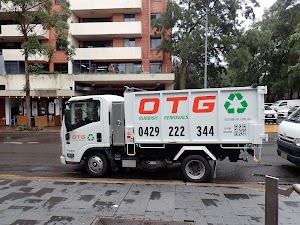
Most rubbish removal companies will tell you they “recycle where possible.” That phrase means almost nothing without specifics. This article documents exactly where OTG’s loads go after pickup: which materials are recycled, which are donated, which require specialist handling, and which genuinely end up in landfill. No marketing spin. Just the process.
If you’re new to using a rubbish removal service, the guide on how household waste is recycled in Australia gives useful background on the national system before reading the specifics below.
Every item removed from your property ends up in one of four places. Australia generated 75.8 million tonnes of waste in 2020-21, according to the Department of Climate Change, Energy, the Environment and Water (DCCEEW, 2023). How that waste is distributed across destinations depends entirely on how well it’s sorted. The four pathways are recycling, donation and reuse, hazardous waste handling, and landfill.
| Destination | What goes there | Why it matters |
|---|---|---|
| Recycling | Metals, paper, cardboard, e-waste, white goods | Recovers raw materials, reduces mining and manufacturing emissions |
| Donation / Reuse | Clothing, furniture in usable condition | Extends product life, avoids both recycling energy cost and landfill |
| Hazardous Handling | Fridges (refrigerants), batteries, certain e-waste | Prevents toxic contamination of soil and groundwater |
| Landfill | Mixed waste with no recycling pathway, contaminated material | Last resort — NSW landfills are nearing capacity in the Greater Sydney region |
The goal of any responsible removal service is to maximise the first three destinations and minimise the last. The only way to do that is through consistent sorting, verified partner relationships, and honest tracking of what ends up where.
Recycling claims are only as credible as the facilities behind them. The NSW EPA found that contamination is the most common reason recyclable materials are rejected at processing facilities and sent to landfill instead (NSW EPA, 2022). OTG separates loads by material stream before passing them to specialist recyclers and donation partners. Here’s the breakdown by material.
Wearable clothing is separated from general rubbish loads and passed to a donation partner rather than going to landfill. Australians discard around 200,000 tonnes of clothing each year, according to the Australian Fashion Council (AFC, 2022). Diverting even a portion of that through donation networks is a meaningful step.
Items that are too worn or damaged for donation are sorted separately.
Paper and cardboard are among the most straightforward materials to recycle, provided they aren’t contaminated with food or moisture. OTG separates clean paper and cardboard from mixed loads and sends them to a recycling partner. Recycling one tonne of paper saves approximately 13 trees, 2.5 barrels of oil, and 4,000 kilowatts of electricity, according to Planet Ark (Planet Ark, 2023).
Heavily soiled or wet cardboard typically cannot be processed and goes to landfill. That’s an honest constraint of the recycling system, not a failure of sorting.
Fridges are one of the more complex items in any rubbish removal load. They contain refrigerants — typically HFCs or older CFCs — that must be degassed by a licensed technician before the appliance can be crushed for scrap. Releasing refrigerants into the atmosphere is illegal under the Ozone Protection and Synthetic Greenhouse Gas Management Act 1989 and carries significant fines. OTG sends fridges to a licensed facility that handles degassing and metal recovery.
For full details on how white goods are handled — including washing machines, dryers, and dishwashers — see the white goods disposal guide.
E-waste is Australia’s fastest-growing waste stream. The Australian Bureau of Statistics reported that Australians generated approximately 554,000 tonnes of e-waste in 2019-20 (ABS, 2022), much of it ending up in landfill where heavy metals such as lead, mercury, and cadmium can leach into soil and groundwater. OTG separates televisions, computers, monitors, phones, and other electronics and passes them to a licensed e-waste recycler.
The dedicated article on e-waste disposal in Australia covers which devices are accepted, what the recycling process involves, and what to do with data-bearing devices before handing them over.
Scrap metal is one of the highest-value recyclable materials in any rubbish removal load. Steel, aluminium, copper, and other metals are fully recyclable with no degradation in quality. OTG separates ferrous and non-ferrous metals and delivers them to a scrap metal recycler. Recycling steel uses approximately 75% less energy than producing it from raw ore, according to the Steel Recycling Institute (SRI, 2023).
No rubbish removal service diverts 100% of waste from landfill. Claiming otherwise isn’t just misleading — it’s counterproductive, because it erodes trust when customers ask the harder questions. The NSW EPA projects that Greater Sydney’s existing landfill capacity will be exhausted within the next decade without significant diversion improvements (NSW EPA, 2022). That context makes honest landfill disclosure more important, not less.
Across the materials OTG handles, roughly 80% of what we collect by volume — including metals, cardboard, clothing, concrete, brick, tiles, and e-waste — is diverted from landfill rather than sent to disposal.
The following materials typically have no viable recycling pathway in the Greater Sydney region and go to landfill as a result:
This list isn’t a failure. It’s a factual description of where the recycling infrastructure currently ends. The honest answer builds more trust than an inflated diversion rate.
The sorting that happens after a load is collected is what separates a sustainable service from one that tips everything straight to landfill. The Australian Government’s waste data shows that source separation — sorting before or during collection — achieves significantly higher diversion rates than post-landfill recovery (DCCEEW, 2023). Here’s what OTG’s depot process actually involves.
After collection, mixed loads are brought back to OTG’s depot and sorted into separate material streams — metals, cardboard, clothing and textiles, concrete, brick and tiles, and e-waste — so recyclable material can be directed to the right facility instead of going to landfill.
In our experience, the sorting step is what most customers never see — and what most removal companies prefer not to document. The fact that OTG can describe this process in detail is the actual proof point of the sustainability claim. Generic statements about “recycling where possible” don’t cut it; a documented process does.
Sustainability claims without evidence are marketing. OTG documents its sorting and recycling work on Instagram, giving customers a visible record of where loads actually go rather than a written policy that can’t be verified. The Australian Competition and Consumer Commission has signalled increased scrutiny of unsubstantiated environmental claims — what it calls “greenwashing” — with formal guidance issued to businesses in 2023 (ACCC, 2023). Real documentation is the only credible response to that standard.
Follow OTG on Instagram at @otgrubbishremovals to see sorting in progress, material streams being separated, and loads delivered to recycling partners.
Documenting recycling on social media does something no policy document can: it creates a timestamped, public record that any customer can browse at any time. That accountability is worth more to a sustainability story than any certification.
The case for diverting rubbish from landfill isn’t abstract. Greater Sydney’s landfill capacity is under real pressure. The NSW EPA has projected that without significant waste diversion improvements, the Sydney region faces a landfill shortfall within the next decade (NSW EPA, 2022). That constraint affects every household and business in the city, regardless of whether they think about it at the time of booking.
Organic material decomposing in landfill produces methane — a greenhouse gas roughly 80 times more potent than carbon dioxide over a 20-year timeframe, according to the Intergovernmental Panel on Climate Change (IPCC, 2021). Australia’s waste sector accounts for approximately 2.5% of national greenhouse gas emissions, according to DCCEEW (DCCEEW, 2023). Diverting organic and recyclable material reduces the volume of waste decomposing in landfill and cuts associated methane output.
Every tonne of metal recycled is a tonne of ore that doesn’t need to be mined. Every tonne of paper recycled saves trees and reduces the energy demand of virgin pulp production. These aren’t marginal gains. Australia exported over 4 million tonnes of recyclable material in 2020-21, generating significant economic value from material that would otherwise be buried (DCCEEW, 2023).
Contamination — the mixing of non-recyclable material into a recyclable stream — is the most common reason recyclable loads are rejected and sent to landfill. The NSW EPA estimates that contamination costs the NSW recycling industry tens of millions of dollars annually in rejected loads and reprocessing costs (NSW EPA, 2022). Professional sorting at the point of collection prevents contamination before it happens, rather than trying to fix it at the processing end.
Furniture is one of the harder categories to divert, since condition varies widely. The guide on furniture disposal in Sydney covers what can be donated, what can be recycled, and what has to go to landfill.
Most rubbish removal companies claim to recycle. Few can describe exactly how. A 2023 ACCC review found that environmental claims in the services sector were among the least substantiated categories of marketing reviewed — with vague phrases such as “eco-friendly” and “green disposal” dominating without supporting evidence (ACCC, 2023). Asking three specific questions separates companies with real processes from those with marketing copy.
The full guide on how to choose a rubbish removal company covers pricing models, insurance, and the other questions worth asking before you book.
Your rubbish goes to one of four places: recycling facilities, donation or reuse networks, licensed hazardous waste handlers, or landfill. OTG sorts loads at the depot after collection, separating materials by stream. Recyclable metals, paper, cardboard, e-waste, white goods, and clothing are all diverted before anything reaches landfill. Only genuinely non-recyclable material goes to a licensed disposal facility.
OTG separates and recycles or donates: metals (ferrous and non-ferrous), paper and cardboard, clothing, e-waste, and white goods including fridges. Fridges require refrigerant degassing by a licensed facility before the metal can be recovered. E-waste is handled by a licensed recycler.
Australia recovered 63% of all waste generated in 2020-21, according to DCCEEW (2023). However, construction and demolition material accounts for a large share of that figure, and it’s recovered at higher rates than household waste. In NSW, contamination remains the leading cause of recyclable loads being rejected and sent to landfill instead, according to the NSW EPA (2022). Household diversion rates remain below what’s technically achievable with better sorting at source.
Rubbish removal can be more sustainable than kerbside collection for mixed loads, because a professional service can sort materials that a household bin system can’t. Whether it actually is sustainable depends on what the company does after pickup. Ask specifically about sorting processes, recycling partners, and documented diversion rates. A company that can answer those questions specifically is one with a real process behind the claim.
OTG Rubbish Removal sorts every load at the depot, separates material streams, and passes recyclables and donations to named partners rather than tipping everything to landfill. The process is documented — on this page and on Instagram at @otgrubbishremovals. Some material does go to landfill, and we’ve been explicit about which categories and why. That’s the honest version of sustainable rubbish removal.
If you have a specific item you’re unsure about — a fridge, a bag of old electronics, a wardrobe full of clothing — call the team before booking. They can tell you where that item is likely to end up and what the handling process involves.
For a broader look at Australia’s recycling system and how household waste moves through it, read the guide on how household waste is recycled in Australia. When you’re ready to book, the team covers all of Greater Sydney.