Hiring the wrong rubbish removalist can leave you personally liable for illegal dumping, even if you never set foot near the tip. In Australia, the legal responsibility for waste disposal doesn’t vanish once the truck leaves your driveway. Here’s a plain-language checklist to help you hire someone worth trusting.
Key Takeaways
- Waste generators can be held liable for illegal dumping carried out by a contractor they hired.
- Legitimate operators carry public liability insurance, hold an ABN, and can provide disposal documentation.
- Real reviews, branded vehicles, and verifiable recycling claims are reliable legitimacy signals.
- Australia’s state EPAs can issue fines exceeding $15,000 for individuals connected to illegal dumping incidents. (NSW EPA, 2024)
Illegal dumping costs Australian councils an estimated $250 million per year to investigate and remediate, according to the Australian Department of Climate Change, Energy, the Environment and Water (2023). The burden doesn’t fall entirely on the dumper. Under environmental protection legislation in every Australian state and territory, the person who generated the waste can face investigation alongside the operator who disposed of it unlawfully.
That’s a real exposure. It means a cheap quote from an unverified operator isn’t just a risk for the environment. It’s a risk for you.
Illegal dumping means depositing waste in an unauthorised location, typically bushland, roadsides, or unregistered private land, without a proper licence. It ranges from a single mattress on a council verge to large-scale commercial waste hidden on rural properties. The scale of the act doesn’t change the legal framework.
Consequences land on multiple parties. The operator faces the heaviest penalties, but investigations frequently extend to anyone in the chain who commissioned or arranged the disposal. Councils and the EPA use surveillance cameras, waste tracking databases, and tip-off lines to trace loads back to their source. Documentation is your best defence.
A trustworthy rubbish removal company should be able to satisfy every item on this list without hesitation. If an operator deflects, makes excuses, or can’t produce basic documentation, treat that as a clear warning sign.
An Australian Business Number (ABN) confirms the business is registered and operating legally. You can verify any ABN for free at abn.business.gov.au in under a minute. Public liability insurance protects you if something goes wrong on your property during collection. Any professional operator carries it without being asked.
OTG Rubbish Removals holds a current ABN (56 643 686 864) and public liability insurance (policy 15T4572991, valid to 14 April 2027). We’re happy to provide documentation on request before you book.
Licensed waste facilities issue receipts or manifests when loads are accepted. A legitimate operator should be able to show you, or at minimum confirm, which licensed facility your rubbish goes to. Vague answers like “we sort it ourselves” or “we have our own tip” without any supporting detail warrant further questioning.
Hazardous materials, including asbestos, chemicals, and certain e-waste, require specific tracking documentation under Australian law. If your load includes any of these categories, ask explicitly how they’re handled before agreeing to anything.
OTG does not handle asbestos — it legally requires a licensed asbestos removalist. If your job involves it, tell us when you book and we’ll point you to the right people.
Many operators claim high recycling rates. According to Australia’s National Waste Report (2022), the national average recovery rate for collected waste sits at around 63%. A company claiming to recycle 80% or more should be able to back that up with the names of their partner facilities, photos from their sorting process, or independently verified data.
Ask directly: “Which recycling facility do you use, and can I see any documentation?” A legitimate operator won’t be flustered by that question. They’ll answer it.
Look at the Google Business Profile closely. Legitimate companies show a consistent trading name, the same owner responding to reviews over time, and photos that match the branded vehicle and uniform described on the website. A sudden cluster of five-star reviews from accounts with no other activity is a pattern worth noticing.
Check whether the review responses use the operator’s name, mention specific jobs, or address complaints honestly. Generic responses copied and pasted across multiple reviews signal a profile that isn’t being managed by the people actually doing the work.
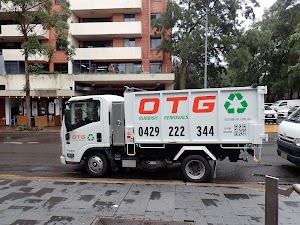
A truck with a company name, phone number, and logo is one of the most straightforward legitimacy signals available. Operators running without branded vehicles are harder to trace if something goes wrong. It’s also worth noting whether the vehicle is well-maintained. A poorly maintained truck doesn’t automatically mean bad practice, but it adds to a picture.
Uniform, photo ID, and branded paperwork (invoice or receipt) are standard in a well-run operation. These details matter less as standalone items and more as part of a consistent picture. A team that’s proud of their work tends to present that way from the moment they arrive.
You don’t need to interrogate every operator, but three or four direct questions will quickly reveal whether you’re dealing with someone who takes compliance seriously. A professional operator will answer these without hesitation.
It’s not always obvious at the point of hire. Operators running illegitimate businesses typically look for the lowest possible disposal cost, which in practice means avoiding licensed facilities altogether. Your load may be dropped on a rural road, in bushland, or on private land without the owner’s knowledge. You have no way of knowing until an investigation links it back to you.
Common warning signs before the job include an unusually low quote with no explanation, pressure to pay cash only, an unwillingness to provide any documentation, and vague or evasive answers about disposal. None of these are conclusive on their own, but two or more together is a serious flag.
Under the Protection of the Environment Operations Act 1997 (NSW), individuals can face fines of up to $15,000 for illegal dumping offences, with corporate penalties significantly higher. Similar frameworks exist in Victoria, Queensland, and other states. The NSW EPA publishes enforcement outcomes annually, and prosecutions involving the original waste generator, not just the transporter, appear in that record.
Environmental damage adds another dimension. Dumped waste can contaminate waterways, harm native wildlife, and require costly remediation funded by ratepayers. The harm isn’t abstract. It’s documented and it persists.
We’d rather show you than tell you. Here’s how OTG satisfies each item on the checklist above.
| Legitimacy Signal | What OTG Does |
|---|---|
| ABN and Insurance | Registered ABN: 56 643 686 864, current public liability insurance (policy 15T4572991, valid to 14 April 2027), documentation available on request |
| Disposal Documentation | Customers receive a receipt confirming the disposal facility used after every job |
| Recycling Claims | We partner with licensed recycling facilities and document diversion rates. See our sustainable rubbish removal approach for detail |
| Google Reviews | Reviews are under the consistent OTG Rubbish Removals name. Owner responses use first names and reference specific jobs |
| Branded Vehicle | All collection vehicles carry OTG branding, phone number, and company name |
| Professional Appearance | Team members wear uniforms and carry ID. Every job includes a written receipt |
We think transparency should be straightforward. If you want to verify anything before booking, ask us directly. That’s exactly the right thing to do.
Verify the company’s ABN at abn.business.gov.au, confirm they hold public liability insurance, and ask which licensed disposal facility they use. Legitimate operators provide this information readily. Check their Google Business Profile for consistent branding and genuine owner responses. Branded vehicles and written receipts are additional signals of a compliant, professional operation.
Ask for the ABN, confirmation of public liability insurance, the name of the licensed disposal facility, whether you’ll receive a receipt after the job, and how they handle recycling. Evasive or vague answers to any of these questions are a warning sign. A professional operator answers them without hesitation.
Investigations by the EPA or council may trace the waste back to its source through records, surveillance, or informants. As the person who generated and commissioned the disposal of that waste, you can be drawn into the investigation. The site will also require remediation, which can involve significant cost and ongoing monitoring. Hiring a documented, licensed operator is the most effective protection.
Yes, under environmental protection legislation in Australian states, the waste generator can face liability alongside the transporter. The NSW EPA and equivalent bodies in other states have prosecuted hirers who could not demonstrate that they took reasonable steps to verify disposal arrangements. Requesting documentation before and after a job is the primary way to protect yourself.
Professional rubbish removal operators carry public liability insurance to cover damage to your property during collection. Not all operators hold this cover, so it’s worth confirming before booking. OTG Rubbish Removals holds current public liability insurance (policy 15T4572991, valid to 14 April 2027) and can provide documentation on request. Your home and contents insurance does not typically extend to rubbish removal activities carried out by contractors.
Choosing a rubbish removalist comes down to three things: documentation, transparency, and consistency. If an operator can show you their ABN, confirm their insurer, name their disposal facility, and hand you a receipt at the end of the job, you’re in good hands. If they can’t, keep looking.
OTG Rubbish Removals operates openly and answers these questions every time. If you want to understand how we handle disposal and recycling before you commit, our sustainable rubbish removal page walks through our approach in full detail.
When you’re ready, book your rubbish removal online in a few minutes. We’ll confirm the details, show up on time, and leave you with a receipt you can keep on file.