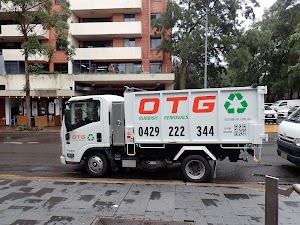
Construction and renovation jobs produce waste that’s heavier, bulkier, and more varied than a standard household cleanout. Timber offcuts, broken tiles, plasterboard sheets, concrete rubble, bricks, metal fittings, and wiring all need to go somewhere. This guide covers what counts as construction waste, how to sort it, what to do if you find asbestos, and how to choose the right removal method for your job.
For waste that mixes construction and household items, the guide on how to dispose of household items in Australia covers the broader picture.
Construction and demolition waste makes up roughly 40% of all waste generated in Australia by weight, according to the Department of Climate Change, Energy, the Environment and Water (DCCEEW, 2023). That figure covers everything from a small bathroom renovation to a full knockdown rebuild. If it came off a structure, it counts.
Common construction waste types from Sydney renos include:
Hazardous materials, including asbestos-containing products, sit in a separate category entirely and require specialist handling. More on that shortly.
Construction loads are handled differently because the materials are denser, heavier, and more varied than household rubbish. Waste industry data from the NSW Environment Protection Authority shows that mixed construction and demolition waste requires routing to specific transfer stations equipped for heavy-material sorting and processing (NSW EPA, 2023). A standard household rubbish vehicle isn’t always the right tool for the job.
There are three practical differences that affect how your reno waste is collected and disposed of.
A single cubic metre of concrete weighs around 2,400 kg. A cubic metre of broken bricks weighs roughly 1,500 kg. Compare that to a cubic metre of bagged household rubbish, which weighs perhaps 150-200 kg. Construction waste can overwhelm a vehicle that’s sized for light household loads — and overloaded vehicles are an on-road safety issue.
Clean construction streams go to different facilities than mixed rubbish. Concrete and bricks go to crushing plants. Scrap metal goes to metal recyclers. Clean timber goes to biomass or mulching facilities. Mixed loads that can’t be sorted end up in landfill, which costs more and wastes recoverable material. Sorting on-site improves the outcome for everyone.
Older Sydney homes, particularly those built before 1990, can contain asbestos in a wide range of building materials. Once that material is disturbed, it becomes a regulated waste stream with strict handling and disposal requirements. No general rubbish removal service can legally accept it.
Australia’s national construction and demolition waste recovery rate reached 76% in 2021-22, according to the DCCEEW (DCCEEW, 2023). That high recovery rate depends on separating the rubbish where you can before it all gets mixed together. Once concrete, timber, plasterboard, and general rubbish are all in the same pile, sorting them at the transfer station becomes expensive and sometimes impossible.
Scrap metal is one of the most valuable recyclable streams from a renovation. Copper pipe, steel reinforcing bar, aluminium window frames, and steel door frames all have high recycling value. Keep metal separate from other waste — even a small bundle of copper pipe is worth recovering rather than burying in landfill.
Unpainted, untreated timber framing and boards can be recycled through biomass or mulching facilities. Timber that’s painted, treated with preservatives, or contaminated with plasterboard or adhesive is harder to recycle and often ends up in landfill. Pull nails and stack lengths separately if you want to maximise the chance of diversion.
Clean, broken concrete without significant embedded steel reinforcing can be crushed and recycled as road base or aggregate. This process is well-established in NSW — crushed concrete aggregate is widely used in road construction and civil works. Concrete mixed with soil, tiles, or organic material is harder to process and may not be accepted at crushing facilities.
Whole or lightly broken bricks that are free from mortar and contamination can be reused or crushed for fill. Reclaimed bricks from older Sydney homes are often in demand for heritage restoration projects. Even partial bricks are useful as crusher dust feedstock. Stack them separately from tiles and concrete if you can.
Asbestos was used in a wide range of building products in Australia until the late 1980s. SafeWork NSW estimates that around one in three homes built before 1987 contains some form of asbestos-containing material (SafeWork NSW, 2023). In Greater Sydney, that means a significant proportion of pre-1990 properties. Fibro homes, brick veneer homes, and even some double-brick homes of that era can all contain it.
Common locations include fibrous cement sheeting on eaves, walls, and ceilings; floor tiles and the adhesive beneath them; roof sheeting on older outbuildings and garages; pipe lagging; and textured ceiling coatings. If your property was built or renovated before 1990, treat any sheeted or textured surface as potentially containing asbestos until proven otherwise.
Testing must be done by an accredited laboratory — not a DIY kit purchased online. SafeWork NSW maintains a list of accredited asbestos assessors and laboratories. Your local council can also point you to accredited testers. The test involves a small sample taken by a qualified professional, then sent for analysis. Results typically come back within a few business days.
Asbestos removal is strictly regulated under the NSW Work Health and Safety Regulation 2017. Non-friable asbestos in amounts up to 10 square metres can be removed by a Class B licensed asbestos removalist. Friable asbestos, or non-friable asbestos over 10 square metres, requires a Class A licensed contractor. Both categories must follow strict handling, containment, and disposal protocols.
Skip bins and rubbish removal services both handle construction waste, but they suit different types of jobs. The choice comes down to how your waste accumulates and how much access you have on-site. A 2022 review of waste management preferences by the Waste Management and Resource Recovery Association of Australia found that skip bins remain the most common solution for trade and construction jobs, while rubbish removal services are preferred for final cleanouts and residential renovations (WMRR, 2022).
For a full breakdown of the two options, read the comparison guide on rubbish removal vs skip bin hire. Here’s the short version for renovation jobs specifically.
Skip bins work best when waste builds up over days or weeks and you need somewhere to put it as the job progresses. A kitchen strip-out that takes five days, a bathroom renovation that runs over two weeks, or a decking replacement where off-cuts accumulate daily — these all suit a skip bin sitting on-site for the duration. You fill it as you go and it disappears when the job’s done.
Skip bins also suit sites where a truck can’t easily access the waste, but a bin placed on the street or driveway is reachable by skip truck.
Rubbish removal suits the final cleanout after the trades have finished, partial loads that wouldn’t fill a skip bin, or jobs where street parking or driveway space makes a skip impractical. If you’ve got a pile of rubbish that’s ready to go now, a rubbish removal crew can arrive, load it, and have the site clear the same day.
On renovation jobs, we’ve found that the most practical approach is often a combination: a skip bin during the main works, and a rubbish removal service for the final sweep of items that didn’t make it into the skip. It’s cleaner and faster than trying to cram everything into a single container at the end.
Preparation directly affects how quickly and cheaply a collection goes. Industry guidance from the NSW EPA recommends separating the rubbish at the source where you can to reduce contamination and improve recycling rates at transfer stations (NSW EPA, 2023). It also speeds up the load-out, which matters when you’re paying by time or volume.
You don’t need perfect separation. Even rough sorting helps. Keep heavy materials — concrete, bricks, tiles — in one pile. Stack timber separately. Bundle wiring and metal together. Bag plasterboard dust and small off-cuts. Mixed loads are harder to process and may attract a higher disposal fee at the transfer station.
Timber that’s stacked flat rather than piled in a tangle takes up less space in the vehicle and loads faster. The same applies to plasterboard sheets. Pull nails from timber boards where practical — exposed nails are a safety issue for the crew and can puncture vehicle liners. Sheets that are broken down to manageable sizes take less room and load more safely than full-length off-cuts.
Access is the single biggest factor in how long a collection takes. If the crew can drive up, load direct from the driveway, and pull away, a job that might take 45 minutes through a narrow passage takes 20. Think about: gate width for the truck, distance from the waste pile to the vehicle, whether there are stairs involved, and whether the street has parking restrictions that would block the truck.
In our experience, the collections that go smoothly every time are the ones where the rubbish is in one place, roughly sorted, and within easy reach of the truck. If you can do those three things, the crew can do the rest.
Yes, in most cases. Rubbish removalists can collect timber, plasterboard, bricks, tiles, concrete, metal, wiring, and mixed construction debris from renovation and demolition jobs. The key exception is asbestos — asbestos-containing material cannot be handled by a general rubbish removal service and requires a licensed asbestos removalist. Always confirm which materials your removalist accepts before booking. For details on what OTG can collect, see the guide on what rubbish removalists can take.
Yes. OTG collects concrete from renovation and demolition jobs across Greater Sydney. Concrete is heavy, so access matters — a driveway or ground-level load-out is much faster and more practical than carrying pieces up stairs or through narrow passages. Clean broken concrete without embedded reinforcing is easiest to process, as it can be crushed and recycled as road base or aggregate at licensed facilities. Let the team know the approximate volume and access situation when you book.
Stop work immediately. Do not disturb, cut, drill, sand, break, or move the suspected material. Get a sample tested by an accredited laboratory before any further work proceeds. Asbestos removal, even in small amounts, must be carried out by a licensed asbestos removalist under NSW Work Health and Safety regulations. OTG does not take asbestos. Contact SafeWork NSW or your local council for guidance and a list of licensed contractors in your area.
Construction waste is typically heavier, bulkier, and contains materials such as concrete, brickwork, timber framing, and plasterboard that require specific disposal facilities. Household rubbish is lighter and more varied. Construction loads often require heavier vehicles, longer load times, and routing to transfer stations equipped for heavy-material sorting — which is why construction waste removal is quoted and handled differently from a standard household cleanout. Some materials, like asbestos, are restricted regardless of the job type.
Construction and renovation waste doesn’t have to sit on-site any longer than necessary. Most material, including timber, plasterboard, concrete, bricks, tiles, metal, and wiring, can be collected, hauled away, and sent to the right facility in a single visit.
Do the basic sorting upfront, keep asbestos questions separate and dealt with first, and think about access before the crew arrives. Those three steps make every construction waste collection faster and cleaner.
Jobs where customers have pre-sorted materials into rough piles and cleared a path to the waste are consistently completed faster and with fewer return visits than jobs where material is mixed and inaccessible — based on typical construction collection jobs completed by OTG across Greater Sydney.
Not sure whether your specific materials are covered? The guide on what rubbish removalists can take lists accepted and non-accepted items. For the skip versus rubbish removal question in more detail, the rubbish removal vs skip bin comparison covers trade and renovation jobs specifically.