Australians generate around 650,000 tonnes of e-waste each year, making it one of the fastest-growing waste streams in the country (Department of Climate Change, Energy, the Environment and Water, 2023). Old TVs, computers, phones, and printers can’t go in your regular bin. This guide covers what counts as e-waste, why disposal rules exist, and the practical options available to you right now.
Key Takeaways
- E-waste includes TVs, computers, monitors, tablets, phones, and printers.
- In Victoria, putting e-waste in general bins is illegal under EPA regulations. NSW and other states advise strongly against it.
- The free NTCRS scheme covers TVs and computers at hundreds of drop-off points nationally.
- Australia generates roughly 650,000 tonnes of e-waste annually (DCCEEW, 2023).
- Recycling recovers copper, aluminium, gold, and rare earth elements from old electronics.
For broader guidance on what you can and can’t put out for collection, see our guide to how to dispose of household items in Australia.
E-waste, or electronic waste, covers any device with a plug, battery, or circuit board that’s been discarded. The Australian Department of Climate Change, Energy, the Environment and Water (DCCEEW) identifies televisions and computers as the primary categories covered by national product stewardship, though the broader definition extends to phones, printers, tablets, and small appliances (DCCEEW, 2023).
The most common items households need to dispose of include:
White goods, such as fridges and washing machines, are handled differently and aren’t classified as e-waste under current Australian schemes. If you’re clearing out appliances alongside electronics, see our guide to white goods disposal.
In our experience collecting rubbish from Sydney homes, old televisions and desktop computers are the most frequently mishandled items. Residents often assume they can go in a skip or a council bin. They can’t, and in some states that assumption can lead to a fine.
E-waste contains hazardous substances that leach into soil and groundwater when sent to landfill. These include lead in older CRT screens, mercury in fluorescent backlights, cadmium in batteries, and brominated flame retardants in plastic casings. EPA Victoria explicitly bans e-waste from all general waste bins and landfills under the Victorian e-waste ban, which took effect in July 2019.
In New South Wales, the NSW EPA advises strongly against disposing of electronics in general waste and actively promotes recycling alternatives. While NSW has not enacted the same blanket ban as Victoria, the guidance is unambiguous: e-waste belongs in a recycling stream, not a landfill bin.
Beyond the legal picture, there’s an economic one. A single tonne of circuit boards contains more gold than a tonne of gold ore. Sending electronics to landfill destroys materials that could be recovered and reused. That’s a resource loss, not just an environmental one.
The Victorian ban is often cited as Australia’s strongest e-waste legislation, but it applies to all Victorians, not just businesses. A homeowner who tosses a broken laptop in the general bin is technically in breach of EPA Victoria regulations, not just a business operator.
The National Television and Computer Recycling Scheme (NTCRS) is Australia’s primary government-backed programme for free e-waste disposal. Established under the Product Stewardship Act 2011, it requires television and computer manufacturers and importers to fund collection and recycling infrastructure across the country. As of 2023, the scheme had diverted over 650,000 tonnes of e-waste from landfill since its launch (DCCEEW, 2023).
The scheme covers televisions, computers (desktops and laptops), computer monitors, and printers. It does not cover mobile phones, tablets, or other consumer electronics. Drop-off is free for households and small businesses at approved collection points.
Use the recycling locator tool on the DCCEEW website at dcceew.gov.au. Enter your postcode and it returns nearby drop-off sites, including retail stores, transfer stations, and dedicated recycling centres. There are hundreds of sites across Australia, including metropolitan Sydney and regional areas.
Manufacturers and importers fund the NTCRS. When you buy a TV or computer in Australia, a proportion of the product’s cost funds the eventual recycling of that item. You don’t pay again at the drop-off point. It’s genuinely free for the household.
For a broader look at how responsible waste management works across different material types, see our page on sustainable rubbish removal.
State-level e-waste regulation varies significantly. Victoria is the most restrictive, with a legally enforceable ban covering all e-waste from general waste streams since July 2019 (EPA Victoria, 2019). Other states rely on guidance and product stewardship frameworks rather than outright bans, though all states participate in the NTCRS.
| State / Territory | Legal Ban on Landfill? | Key Source |
|---|---|---|
| Victoria | Yes – full ban since July 2019 | EPA Victoria |
| New South Wales | No ban, but strongly advised against | NSW EPA |
| Queensland | No explicit ban; NTCRS applies | DCCEEW |
| South Australia | No explicit ban; NTCRS applies | DCCEEW |
| Western Australia | No explicit ban; NTCRS applies | DCCEEW |
| ACT, NT, TAS | No explicit ban; NTCRS applies | DCCEEW |
Victoria’s approach gives residents the clearest legal signal. NSW is catching up through its waste policy frameworks, but the practical advice across all states is the same: use a drop-off point or a collection service rather than putting electronics in any bin.
Recycling electronics recovers a significant range of valuable materials. According to the United Nations University’s Global E-Waste Monitor, e-waste contains recoverable materials worth an estimated USD 62.5 billion globally each year, yet less than 20% is formally recycled (Global E-Waste Monitor, 2024). Australia performs better than the global average, but recovery rates still leave room for improvement.
Here’s what typically comes out of an e-waste recycling run:
The recovery process typically involves shredding, mechanical separation, and then chemical or smelting processes to isolate individual materials. What comes out the other end goes back into manufacturing supply chains.
The right disposal method depends on volume, mobility, and what types of electronics you’re clearing out. The NTCRS drop-off network covers over 1,800 collection points across Australia (DCCEEW, 2023), which suits most households clearing one or two items at a time.
Drop-off is ideal if you have one or two items covered by the NTCRS, a car large enough to transport them, and a site close enough to be practical. For a single old computer or television, it’s the most straightforward free option. Most drop-off sites accept items seven days a week during business hours.
If you’re clearing an entire home office, a deceased estate, or a room full of mixed electronics, transporting everything yourself becomes impractical. A collection service handles the logistics, sorts items into the right streams, and removes everything in a single visit. This is particularly useful when e-waste is mixed in with other rubbish, furniture, or white goods that need to go at the same time.
Collection also makes sense when items are too heavy or bulky to move without equipment. Old CRT televisions, server racks, and large multi-function printers are not easy to load into a hatchback.
When e-waste is mixed in with a larger rubbish removal job, separating it at the point of collection is the most efficient approach. A 2022 report by the Australian Bureau of Statistics found that 62% of Australian households owned at least one item of electronic equipment they no longer used but hadn’t yet disposed of (ABS, 2022), which means e-waste is a routine part of most home clearances.
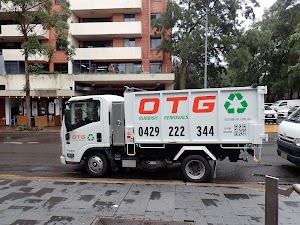
OTG collects e-waste as part of rubbish removal jobs and directs it away from landfill. Items are separated from general waste on-site so they reach an appropriate recycling stream rather than ending up in a skip with everything else.
If you have a large volume of e-waste only, with no other rubbish to remove, a nearby NTCRS drop-off point is the most direct free option. But if electronics are part of a broader clear-out, booking a collection is the simpler path.
If you’re clearing old appliances alongside electronics, see how OTG handles white goods disposal.
The National Television and Computer Recycling Scheme (NTCRS) provides free drop-off for computers, laptops, monitors, and printers at hundreds of locations across Australia. Use the drop-off locator at dcceew.gov.au to find your nearest site. Some local councils also run periodic e-waste collection events at no cost to residents. Wipe your data before dropping anything off.
No. In Victoria it’s explicitly illegal under EPA regulations to place a television in general waste or a landfill bin. In NSW and other states, the EPA advises strongly against it due to the hazardous materials inside. TVs are covered by the free NTCRS scheme. Drop-off is free at hundreds of sites nationally. There’s no reason to landfill a television anywhere in Australia.
Recycled e-waste is shredded and processed to recover copper, aluminium, steel, gold, silver, and rare earth elements. Plastics and glass are also recovered and reprocessed. Hazardous substances including lead, mercury, and cadmium are extracted and treated safely rather than leaching into soil or groundwater. Recovered metals return to manufacturing supply chains, reducing the need to mine new materials.
OTG collects e-waste as part of rubbish removal jobs and separates it from general waste to keep it out of landfill. If you only have e-waste to move with no other rubbish, the NTCRS drop-off network offers free disposal for televisions and computers. For mixed loads, booking OTG to handle everything at once is the simpler option.
No. The NTCRS only covers televisions, computers (including laptops), monitors, and printers. Mobile phones and tablets fall outside the scheme. However, many manufacturers and retailers run their own take-back programmes. MobileMuster is Australia’s dedicated free mobile phone recycling programme, operating through retail stores and council drop-off points across the country.
If you’re clearing a home, office, or estate and electronics are part of the mix, OTG handles the collection and sorting so you don’t have to make separate trips to multiple drop-off sites. We separate e-waste from general rubbish on-site and direct it to the right stream.
Get in touch via otgrubbish.com.au to book a collection or request a quote. For recycling guidance across other waste types, our sustainable rubbish removal page covers the full picture.