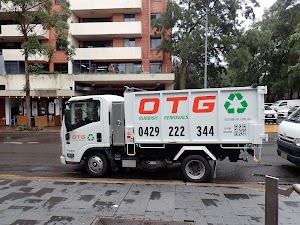
Most common household items can’t go in the weekly rubbish bin. Mattresses, fridges, televisions, paint tins, and tyres each have specific disposal rules under Australian state law. This guide covers nine of the most commonly mishandled items, why they can’t be binned, and the legitimate options for each — council, donation, specialist facility, or professional removal.
Key Takeaways
- Bulky items like mattresses, white goods, and furniture cannot go in a standard kerbside bin.
- E-waste contains toxic materials and is banned from landfill in many Australian states.
- Australia generates around 75 million mattresses entering the waste stream each decade, with most ending in landfill (Australian Government Department of the Environment, 2023).
- Your options for most items are: council collection, donation, specialist drop-off, or professional rubbish removal.
- Some items — like tyres and household chemicals — require licensed facilities and cannot be handled by general rubbish removalists.
If you’re unsure what a rubbish removal service can legally take, start with our overview of what rubbish removalists can and can’t take. For sustainability-focused options, see our guide to sustainable rubbish removal.
Mattresses are one of the most problematic items in the Australian waste stream. The Soft Landing Mattress Recycling program, supported by the Australian government, estimates that around 1.8 million mattresses are disposed of in Australia each year, with the majority going straight to landfill (Soft Landing, 2023). They’re bulky, they compress landfill space, and most councils won’t collect them on a standard bin day.
You can’t put a mattress in your kerbside bin. The springs and foam make it impossible, and most councils explicitly prohibit it. Your options are a council hard rubbish collection, a mattress-specific recycler like Soft Landing, a charity if the mattress is in good condition, or a professional rubbish removal service that handles mattress disposal compliantly.
Soft Landing operates drop-off and collection services in several Australian states. Mattresses are disassembled and up to 95% of materials — steel springs, foam, timber, and fabric — are recovered for reuse or recycling.
Read the full guide to mattress disposal in Australia.
E-waste is Australia’s fastest-growing waste category. The Australian Bureau of Statistics reported that Australians generated approximately 539,000 tonnes of e-waste in 2019-20, and that figure has continued to rise (Australian Bureau of Statistics, 2022). Televisions, computers, laptops, and mobile phones contain lead, mercury, and cadmium — all of which are classified as hazardous under Australian state legislation.
E-waste is banned from landfill in Victoria, South Australia, and the ACT, with other states moving toward similar legislation. Regardless of your state, putting e-waste in the general rubbish bin is both environmentally harmful and increasingly illegal.
The main disposal options are the National Television and Computer Recycling Scheme (NTCRS), which provides free drop-off points at locations around Australia; council e-waste events; manufacturer take-back programs; and professional rubbish removal services that work with accredited recyclers.
Read the full guide to e-waste disposal in Australia.
White goods present two specific challenges beyond their size. Older fridges and air conditioners contain refrigerants — chlorofluorocarbons (CFCs) or hydrofluorocarbons (HFCs) — that must be recovered by a licensed technician before disposal, under the Australian Refrigeration Council’s regulations (Australian Refrigeration Council, 2023). Improper disposal of refrigerants is a federal offence.
You can’t place a fridge or washing machine in a standard skip bin without confirming the refrigerant has been removed first. Some councils offer a white goods pickup service, sometimes with a small fee. Retailers are increasingly required to offer take-back programs when you buy a replacement appliance.
For items in working order, charities including St Vincent de Paul and The Salvation Army sometimes accept white goods, subject to their intake criteria. For non-working items, professional rubbish removal services that handle refrigerant compliance are the most practical option.
Read the full guide to white goods disposal.
Furniture is the single largest category of bulky waste in Australian councils. The Australian Council of Recycling found that furniture accounts for a significant portion of hard rubbish collected kerbside each year, with sofas and bed frames among the most commonly dumped items (Australian Council of Recycling, 2022). Illegal dumping of furniture carries fines of up to $15,000 in NSW under the Protection of the Environment Operations Act.
Furniture that’s in reasonable condition should go to charity first. Op shops, Habitat for Humanity ReStores, and Facebook Marketplace are practical outlets. Flat-pack and broken furniture typically can’t be donated, but timber and metal components are recyclable.
Council hard rubbish collections accept most furniture, but scheduling can mean waiting weeks. Professional rubbish removal services collect same-week or next-day and handle the sorting on your behalf.
Read the full guide to furniture disposal in Sydney.
Paint and household chemicals are classified as hazardous waste in all Australian states. The Product Stewardship for Oil Program and PaintBack scheme have collectively diverted hundreds of thousands of litres of problem waste from landfill since launching in Australia (PaintBack, 2023). Neither paint tins nor chemical containers belong in a standard skip bin or kerbside rubbish bin.
For paint tins, the PaintBack scheme offers free drop-off at participating hardware stores and retailers across Australia, including Bunnings locations. This covers most paint types — oil-based, water-based, and aerosol cans. OTG accepts paint tins as part of its rubbish removal service, directing them to compliant disposal pathways.
Household chemicals — including pesticides, solvents, pool chemicals, and cleaning agents — are a different matter. These require specialist hazardous waste facilities and are not handled by general rubbish removalists, including OTG. Your council’s chemical CleanOut events (run periodically in partnership with the NSW EPA and equivalent bodies in other states) are the right pathway for these items. Check your council’s website for upcoming event dates.
Garden waste, or green waste, makes up a substantial portion of what goes into Australian kerbside bins. The Australian Government’s National Waste Report found that organic waste — including garden and food waste — represents around 38% of total household waste generated in Australia (Australian Government Department of the Environment, 2022). Most of it can be diverted from landfill.
Most councils provide a green-lid bin specifically for garden waste, collected fortnightly. This covers lawn clippings, prunings, leaves, and small branches. Larger volumes from tree removal or major landscaping projects require a different approach.
Options for larger volumes include hiring a skip bin designated for green waste (check your provider accepts it), booking a rubbish removal service, or hiring a mulcher and composting on-site. Timber from trees may have a second life as firewood or mulch — worth offering on community platforms before calling it waste.
Construction and demolition waste is the largest category of waste generated in Australia by volume. The National Waste Report 2022 found that the construction sector produced 27.7 million tonnes of waste in 2020-21, representing 44% of Australia’s total waste generation (Australian Government Department of the Environment, 2022). Even small renovation jobs — a bathroom retile or a deck removal — produce significant debris that needs proper handling.
Construction debris includes concrete, bricks, tiles, timber, plasterboard, and insulation. Most of this cannot go into a standard skip bin or general rubbish collection. Plasterboard in particular has specific landfill restrictions in several states because it produces hydrogen sulphide gas as it breaks down.
For small DIY renovation jobs, a heavy material skip bin is the standard option. For larger volumes or ongoing projects, a professional rubbish removal service that separates materials for recycling is more cost-effective. Concrete and bricks can often be crushed and recycled as road base. Timber is recyclable where it’s free of nails and paint.
Read the full guide to construction waste removal in Sydney.
Tyre disposal is tightly regulated across all Australian states. Tyres are classified as a problematic waste stream, and the Tyre Stewardship Australia scheme has been responsible for recovering and recycling millions of equivalent passenger units (EPUs) of tyres annually since 2015 (Tyre Stewardship Australia, 2023). Illegal tyre dumping carries significant fines and creates fire hazards and mosquito breeding grounds.
Tyres cannot go in a standard skip bin or kerbside rubbish collection. They must be handled by licensed tyre retailers, tyre recyclers, or approved tip facilities that accept tyres under specific controlled conditions. Most tyre retailers will accept old tyres when you purchase replacements, sometimes for a small fee.
OTG takes tyres as part of a rubbish removal job. If you’re unsure whether your state has a specific drop-off program near you, visit the Tyre Stewardship Australia website for an accredited location finder.
Textile waste is one of Australia’s fastest-growing and least-recycled waste categories. The Australian Fashion Council estimates that Australians send around 200,000 tonnes of clothing and textiles to landfill each year, with less than 15% being collected for reuse or recycling (Australian Fashion Council, 2023). Most of it could be diverted with minimal effort.
Wearable clothes and textiles in reasonable condition should go to charity bins or op shops first. The Salvation Army, St Vincent de Paul, Red Cross, and local op shops all accept donations of clothing, linen, and accessories. Most also have external donation bins at convenient locations.
For clothes that are worn beyond donation quality, look for textile recycling programs. H&M, Zara, and some other retailers have in-store textile collection bins regardless of brand. The Upparel service (formerly MRC) collects and repurposes unusable textiles across Australia.
Old clothes and textiles can go into general rubbish as a last resort, but recycling or donation should always be the first step. They don’t require special handling and won’t attract a tip fee — the barrier is simply finding the right channel.
A long list of common household items can’t go in the standard kerbside bin. These include mattresses, white goods, televisions and computers, tyres, paint tins, household chemicals, large furniture, and construction debris. Most councils also prohibit car batteries, gas cylinders, and motor oil. Placing prohibited items in the general bin can result in a rejected collection or, in serious cases, a council fine. Check your local council’s waste guidelines for the full list specific to your area.
You have three main options for bulky items. First, check your council’s hard rubbish or bulky waste collection schedule — most offer at least one free collection per year. Second, charities like The Salvation Army or St Vincent de Paul collect furniture and white goods in usable condition. Third, book a professional rubbish removal service for same-week or next-day collection. Professional removal is the fastest option and works regardless of what condition the item is in.
In most Australian councils, at least one hard rubbish collection per year is included in your annual rates. Some councils offer additional collections for a fee. The main limitation is timing — you book a slot and wait for the scheduled date, which can be weeks or months away. Volume limits also apply, and councils often restrict certain items. If timing matters, professional rubbish removal is a faster and more flexible alternative.
OTG sorts collected rubbish into recycling, donation, and landfill streams rather than sending everything to the tip. Metals, timber, cardboard, and certain plastics are directed to recycling facilities. E-waste is sent to NTCRS-accredited recyclers. Furniture in usable condition is assessed for donation. Paint tins are directed to compliant disposal pathways. The goal is to keep as much as possible out of landfill. For a full breakdown of what OTG handles, visit the sustainable rubbish removal page.
Working out the right disposal pathway for nine different items takes time. If you’ve got a mix of rubbish, hard goods, and bulky items ready to go, OTG can collect them, sort what’s recyclable or donatable, and handle the tip fees compliantly so you don’t have to.
Get a quote online or call OTG directly. Visit otgrubbish.com.au to book a collection or ask about a specific item.