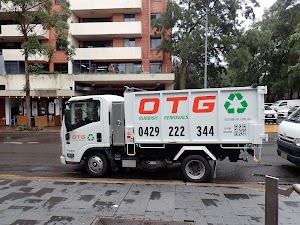
A commercial clear-out covers far more than bagging up old paperwork. Office furniture, electronic equipment, fitout materials, confidential documents, and end-of-lease rubbish all need to go — and they each need handling differently. OTG manages the full scope for Sydney businesses, working around your operating hours to keep disruption to a minimum.
For a full picture of what OTG handles across residential and commercial jobs, see the rubbish removal services overview.
Australian businesses generated over 2.5 million tonnes of commercial and industrial waste in 2021-22, according to the Department of Climate Change, Energy, the Environment and Water (DCCEEW, 2023). A single office fitout or end-of-lease cleanout can produce several tonnes on its own. OTG handles every category a typical office or commercial space generates.
The scope of a commercial clear-out depends on the job, but most involve some combination of the following.
Desks, chairs, filing cabinets, shelving, reception counters, and partitions are the most common items. The crew carries everything out — you don’t need to move pieces to the kerb or loading dock beforehand. Items in usable condition are diverted to charity or reuse where possible.
Computers, monitors, servers, printers, phones, UPS units, and peripherals all qualify as e-waste. These items cannot go to general landfill under NSW legislation. OTG routes e-waste through licensed recycling facilities. See the section on e-waste handling below for more detail.
Bulk paper, cardboard boxes, and filing materials are collected and recycled through standard streams. For documents that require secure destruction before disposal, note the separate section on confidential document handling below.
Stripped-out fitout materials — plasterboard, flooring, ceiling tiles, light fittings, cable ducting, and the like — are a regular part of commercial clear-outs. OTG handles these alongside the other categories in the same job where volume and access allow.
End-of-lease obligations often require a commercial space to be returned in a condition close to its original fit. That means clearing everything the outgoing tenant no longer needs. OTG can work to a site inspection checklist if your property manager provides one, helping ensure the space passes inspection.
Disruption to staff and clients is the main concern for facilities managers booking a commercial clear-out. Research by the Property Council of Australia found that unplanned disruptions to office operations cost Sydney CBD businesses an average of 1.4 productive hours per affected employee per incident (Property Council of Australia, 2022). Scheduling rubbish removal for off-peak windows avoids this entirely.
OTG can schedule collections for early mornings, evenings, and weekends to work around your operating hours. When you contact the team, tell them your building’s access hours, lift booking requirements, and any loading dock restrictions. That information determines what’s achievable for your site.
In our experience, the jobs that run most smoothly are those where the facilities manager has spoken to building management before booking. Lift availability and loading dock access are the two constraints that most often affect commercial collection timing.
E-waste is the fastest-growing waste stream in Australia. The Australian Bureau of Statistics reported that Australians discarded approximately 560,000 tonnes of e-waste in 2019-20, with commercial sources accounting for a significant share (ABS, 2021). For businesses, how you dispose of electronic equipment is increasingly a question of both legal compliance and corporate reputation.
NSW legislation prohibits e-waste from going to general landfill. OTG collects business e-waste and routes it to licensed recycling facilities, keeping hazardous materials — lead, mercury, cadmium, and rare earth elements — out of the waste stream.
For large-volume e-waste collections, contact OTG to discuss scheduling a dedicated run. High-value equipment that can be refurbished rather than recycled should be identified before the collection day.
For a detailed breakdown of what qualifies as e-waste and how the disposal process works, see the guide to e-waste disposal in Australia.
Paper handling is a common concern in commercial clear-outs, particularly for legal, financial, and medical businesses. The Office of the Australian Information Commissioner reports that physical document breaches remain among the top five sources of data-related incidents notified under the Notifiable Data Breaches scheme (OAIC, 2023). Knowing exactly what service your rubbish removal provider offers is essential.
OTG collects bulk paper and cardboard and recycles it through standard commercial paper streams. This is appropriate for non-sensitive materials: general correspondence, internal memos, printed reports, and cardboard packaging.
OTG offers secure document shredding for confidential business records — client files, financial documents, HR records, and legal materials — and provides a certificate of destruction once the documents have been destroyed. Non-sensitive paper and cardboard can be collected and recycled through standard streams as part of the same clear-out.
Most commercial rubbish removal needs fall into one of two categories: a scheduled recurring collection or a single-event clear-out. A 2022 survey by the Australian Facilities Management Association found that 63% of facilities managers in commercial buildings report accumulating bulky waste at a rate that standard council collections can’t handle (FMA, 2022). Choosing the right service model prevents that build-up.
Best suited to end-of-lease cleanouts, office relocations, fitout removals, and post-renovation clear-ups. You contact OTG, schedule a date, and the team clears everything in one visit. No ongoing commitment required.
For businesses that generate ongoing bulky waste — retail stockrooms, warehouses, hospitality venues, or large commercial tenancies — a regular scheduled collection prevents accumulation. The team comes on a set cycle: weekly, fortnightly, or monthly, depending on your volume.
Facilities managers often underestimate how quickly rubbish accumulates between fitout phases. A standing arrangement with a rubbish removal provider, even for just one collection a month, is far easier to manage than calling for an emergency clear-out the week before a lease inspection.
Corporate sustainability reporting is becoming a standard requirement rather than a voluntary exercise. The Australian Securities Exchange reports that ESG disclosure rates among ASX 300 companies have risen steadily, with waste diversion data now appearing in the majority of published sustainability reports (ASX, 2023). Facilities managers at these organisations need documentation they can reference in those disclosures.
OTG does not currently provide formal recycling or ESG reports. If your organisation needs waste diversion figures for sustainability reporting, raise this when you contact the team. The team can advise on what documentation is currently available for your collection.
For more on how OTG approaches waste diversion and recycling across its services, see the sustainable rubbish removal page.
Yes. OTG removes all types of office furniture, including desks, chairs, filing cabinets, shelving, partitions, and reception counters. The crew carries everything out from your floor level — you don’t need to move items to the kerb or loading dock first. Furniture in good condition is diverted to charity or reuse where possible, keeping it out of landfill.
OTG can schedule commercial collections outside standard business hours, including early mornings, evenings, and weekends. This minimises disruption to your staff and other tenants in the building. Availability depends on your location, the size of the job, and access requirements. Contact OTG to confirm what’s possible for your site and preferred window.
OTG collects business e-waste — computers, monitors, servers, printers, phones, and peripherals — and routes it to licensed e-waste recycling facilities. This keeps hazardous materials out of landfill and supports your compliance with NSW e-waste legislation. For large-volume e-waste collections, contact OTG ahead of your scheduled clear-out to discuss a dedicated run. See the full guide to e-waste disposal in Australia for more detail.
OTG does not currently provide formal recycling or ESG reports. If your organisation requires waste diversion data for ESG or sustainability reporting, raise this when you contact the team. They can advise on what documentation is available for your specific collection.
An office clear-out is a one-off service tied to a specific event: a relocation, end-of-lease, fitout removal, or post-renovation clean-up. A regular commercial collection is a standing arrangement on a set cycle, suited to businesses that generate ongoing bulky or specialist waste. OTG offers both. Discuss your situation with the team and they’ll advise on the right approach.
A well-managed office clear-out keeps your end-of-lease obligations on track, keeps hazardous materials out of landfill, and keeps disruption to your team to a minimum. OTG handles furniture, e-waste, paper, fitout debris, and general rubbish in a single visit, working around your operating hours and building access requirements.
Contact OTG to discuss your job, confirm scheduling options, and get a quote. There’s no commitment until you’ve seen the on-site price.
See the full list of rubbish removal services OTG provides across Greater Sydney, or contact the team directly to discuss your commercial clear-out.