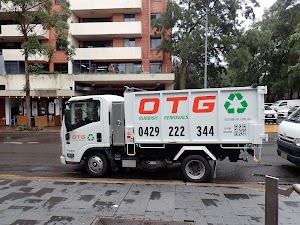
Hard rubbish is bulky household waste that won’t fit in your regular bin — old furniture, broken appliances, mattresses, and similar items. Council schemes pick it up for free on a fixed schedule, but they come with real limits on timing, item types, and quantities. Paid hard rubbish removal fills the gaps when you need to move quickly or your items don’t qualify.
Key Takeaways
- Hard rubbish covers bulky household items too large for your regular bin, including furniture, mattresses, and appliances.
- Sydney council hard rubbish schemes are free but scheduled — many councils offer just one or two collections per property per year.
- Item caps, restricted materials, and strict kerb-presentation rules mean council pickup doesn’t suit every job.
- Paid removal makes sense when you can’t wait, have restricted items, or have more than the council allowance.
- OTG’s hard rubbish service covers the North Shore and Eastern Suburbs with same-day and next-day availability.
For a broader look at what professional rubbish removal covers, see our complete guide to rubbish removal services in Sydney.
Hard rubbish refers to bulky household items that can’t go into your standard kerbside bins. The term is used widely across New South Wales, Victoria, and Queensland, though some councils use terms like “bulk waste” or “large household items” instead. Generally, if it won’t fit in your bin lid and it’s not a chemical or vehicle, it’s hard rubbish.
Common hard rubbish items include:
Hard rubbish is not garden waste, general household rubbish, or construction debris — those follow different disposal rules. The key feature of hard rubbish is that it’s solid, bulky, and typically comes from inside or around the home.
The term “hard rubbish” is an Australian colloquialism for bulky household waste items that cannot be placed in standard kerbside bins. Most Australian local councils operate scheduled hard rubbish collection schemes, though eligibility criteria, item caps, and collection frequencies vary significantly between council areas. (Source: Various NSW and VIC council waste management guidelines)
Council hard rubbish collection is a free service offered by most Sydney metropolitan councils. Each council sets its own schedule, item limits, and rules, so what applies in one suburb won’t necessarily apply in the next. Most North Shore and Eastern Suburbs councils provide at least one scheduled collection per property each year — some offer a booking system where you request a collection window. In the areas OTG services, Willoughby and Woollahra provide a few scheduled clean-ups each year, while Waverley and Northern Beaches run a pre-booked, on-call service (generally two collections per household each year). Limits, accepted items and dates vary by council, so check yours before putting anything out.
The booking process varies by council. Some run fixed scheduled collections where all properties in a street or zone get a pickup on the same date. Others run a booking system where you request a collection and a window is allocated. Check your council’s website for current arrangements. You can book or check the details directly with your council — for example Willoughby, Woollahra, Waverley, or Northern Beaches.
Once booked, the process is straightforward:
Most councils set a volume or item cap. Common limits include a maximum pile size (often expressed in cubic metres), a cap on total items, or both. Some councils also impose weight limits or restrictions on how many electrical items can be included in a single collection. It’s worth checking your council’s exact rules before putting anything out.
Council hard rubbish collection is useful, but it has real limitations that catch many residents off guard. Timing is the biggest issue — if you need something gone this week and your next collection isn’t for months, the free service doesn’t help you.
Most Sydney councils will not collect the following through their hard rubbish schemes:
OTG does not handle asbestos — it legally requires a licensed asbestos removalist. If your job involves it, tell us when you book and we’ll point you to the right people.
Some councils also restrict fridges and freezers due to the refrigerant handling required. Others accept them but with conditions. Check directly with your council before placing any appliance on the kerb.
Councils are strict about how items must be presented. Rubbish placed too early can attract fines — some councils allow items out only 48 hours before your scheduled collection. Items must be separate from your regular bins, stacked safely, and not blocking the footpath or road. If your pile isn’t compliant, the crew may leave it behind without notice.
For residents in apartments and strata buildings, council hard rubbish access can be more complicated. Some councils require residents to obtain body corporate approval before placing items at the kerb. Others direct apartment residents to transfer station drop-offs rather than kerbside collection. If you’re in a unit or apartment on the North Shore or in the Eastern Suburbs, confirm the exact rules with your council and building manager before putting anything out.
For a side-by-side look at the tradeoffs, read our detailed breakdown of rubbish removal vs council hard rubbish collection.
Paid hard rubbish removal is worth considering in four main situations: you need it gone quickly, you have items the council won’t accept, you have more than the council allowance, or your property setup makes kerb-presentation difficult. In any of these cases, waiting for a scheduled collection isn’t practical.
OTG Rubbish Removals covers the North Shore and Eastern Suburbs of Sydney with same-day and next-day hard rubbish removal. The process is straightforward: call for an on-site quote, and if you’re happy with the assessment, the crew loads and removes everything in one visit. You don’t need to drag anything to the kerb.
OTG handles many items that fall outside standard council hard rubbish schemes, including:
Note: OTG does not take chemicals, cars, or large vehicles. If you’re unsure whether an item qualifies, it’s worth a quick call before booking.
Hard rubbish collected by OTG is sorted at the depot, not driven straight to landfill. Recyclable metals, e-waste, and timber are separated and directed to appropriate recycling streams. Usable furniture and household items are assessed for donation where possible. What genuinely can’t be reused or recycled goes to a licensed disposal facility. Across OTG’s loads, around 80% of collected material — metals, cardboard, timber, concrete, brick, tiles and e-waste — is diverted from landfill.
Call OTG directly on 0429 222 344 or submit an enquiry through the website. Have a rough idea of what items you need removed and where they’re located — that’s enough to get the process started. For larger jobs, an on-site quote gives an accurate picture of what’s involved before any commitment is made.
Most jobs on the North Shore and Eastern Suburbs can be booked for same-day or next-day collection, subject to current scheduling.
OTG services the North Shore and Eastern Suburbs with same-day availability. Call 0429 222 344 for a book an on-site quote — no commitment until you’re happy with the assessment.
Hard rubbish is the Australian term for bulky household items that are too large for your standard kerbside bins. This includes old furniture, mattresses, appliances, whitegoods, e-waste, bicycles, and similar solid household items. It does not include garden waste, construction debris, chemicals, or general household rubbish, which have separate disposal pathways.
Council hard rubbish pickup schedules vary by council area. Most North Shore and Eastern Suburbs councils — including Willoughby, Northern Beaches Council, Woollahra, and Waverley — offer at least one scheduled collection per property per year, with some using a booking system. Check your council’s website directly for current collection dates and booking procedures, as schedules change each year.
No. Placing hard rubbish on the kerb outside of your allocated collection window can result in a fine from your council. Most councils specify a maximum window — often 48 hours before your scheduled pickup — and items left out early are considered illegal dumping. If you need items removed outside the council schedule, paid rubbish removal is the practical alternative.
Most Sydney councils exclude chemicals, paint, asbestos, tyres, gas bottles, construction debris, and car parts from hard rubbish schemes. Some also restrict or limit fridges, freezers, and mattresses. Items placed outside these rules may be left uncollected. For excluded items, council hazardous household waste drop-off events, tip visits, or professional rubbish removalists are the alternatives to consider.
General rubbish removal handles mixed household waste, including bags of rubbish, smaller items, and anything that accumulates day to day. Hard rubbish removal specifically deals with bulky items — furniture, appliances, mattresses — that won’t fit in bins. In practice, a professional rubbish removalist like OTG handles both in a single job, rather than treating them as separate categories.