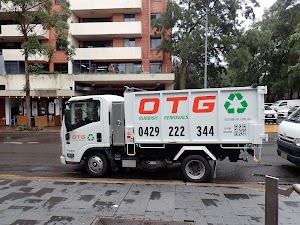
Council hard rubbish collection is free and worth using when your items qualify and your timeline is flexible. Paid rubbish removal makes more sense when you’re working to a deadline, your items fall outside the council’s accepted list, or the volume exceeds what a single council collection allows. This guide helps you figure out which option fits your situation.
If you’ve already decided a paid service suits your situation, the hard rubbish removal page covers what OTG collects and how the process works.
Council hard rubbish collection is a scheduled kerbside service, funded through council rates, that lets residents put out bulky items for collection outside of the standard bin system. According to the NSW EPA, approximately 40% of Sydney households use council hard rubbish services in a given year (NSW EPA, 2023). The process, schedule, and item limits vary significantly between council areas.
In the North Shore and Eastern Suburbs, councils like Willoughby, Lane Cove, Ku-ring-gai, Randwick, and Waverley each run their own version of the scheme. Some operate on a fixed annual schedule, where a collection date is assigned to your street each year. Others have shifted to booking-on-demand, where you request a pickup through the council’s website or by phone when you need one.
For annual schedule councils, you don’t book at all. Your collection date is published in advance and you simply put your items out at the kerb by the night before. For on-demand councils, you log a request through the council’s website, choose a date window, and receive a confirmation. Either way, check your specific council’s website first — the process is not the same across Greater Sydney.
Most councils accept furniture (sofas, beds, wardrobes, tables), white goods and appliances, timber, small amounts of general household rubbish, and garden equipment. Acceptance is not universal, though. Item lists differ between councils, and what one area accepts another may refuse. Always check your council’s current accepted items list, not a general summary.
Most councils require items to be stacked neatly at the kerb, within a defined pile size, and placed out no earlier than a specified number of days before collection. Items must not block drains, footpaths, or traffic. Putting items out too early or in the wrong location can result in a fine or a refused collection — check the presentation rules before you put anything out.
Council collection has real constraints that catch people off guard. The NSW EPA’s 2022 Waste and Sustainability Improvement Payments report found that scheduling delays and item refusals are the two most common reasons residents seek alternative disposal methods (NSW EPA, 2022). Understanding these limits upfront saves wasted time and effort.
Annual schedule councils assign collection dates months in advance. If you’ve just cleared out a garage, finished a renovation, or need to vacate a property, waiting until the next assigned date isn’t always practical. On-demand councils offer more flexibility, but popular booking windows fill quickly and lead times can still stretch to several weeks.
Most councils cap the volume you can put out in a single collection. Typical limits run from around 1 to 3 cubic metres, depending on the council. A full house clearance, a garage cleanout, or a renovation involving multiple rooms will almost certainly exceed a single council collection allowance. You’d need to hold items back for a future collection, which isn’t always possible.
This is where council schemes have the most significant gaps. Common items refused by Sydney councils include:
The items most commonly left over after a renovation or full house clearance, tyres, chemicals, mattresses, and building waste, are exactly the ones most likely to be refused by council. It’s worth checking your list against your council’s accepted items before banking on a free collection.
Council hard rubbish collection is the right choice more often than people assume. It’s free, it’s convenient for eligible items, and it’s well-suited to the majority of routine household clearances. A 2022 Sustainability Victoria report found that kerbside collection diverts hundreds of thousands of tonnes of reusable material from landfill each year (Sustainability Victoria, 2022). Use it when it fits.
Council pickup is genuinely the right call when all of the following apply to your situation:
In our experience, the households who get the most out of council collection are those who plan ahead, check the accepted items list before putting anything out, and keep the volume within the cap. Those are also the households least likely to call us because of a refused collection.
Paid rubbish removal covers what council schemes don’t. IBISWorld’s 2023 report on Waste Collection Services in Australia found that demand for residential rubbish removal services has grown steadily, with customers citing schedule inflexibility and item restrictions as primary drivers for choosing a paid service over council collection (IBISWorld, 2023). There are five situations where paying makes clear sense.
A settlement date, a property vacate, a deceased estate clearance, or a renovation starting Monday doesn’t wait for a council schedule. Paid removal can often be arranged same-day or next-day. If timing is the issue, a paid service is the practical answer.
Tyres, mattresses (in some councils), old paint, e-waste, and building materials all fall outside most council hard rubbish schemes. A professional removalist handles these items routinely. They know the correct disposal pathways for each item type, including recycling streams and licensed facilities for hazardous materials.
A full house clearance, a garage cleanout, or a renovation typically generates far more than 2-3 cubic metres of rubbish. Splitting a large load across multiple council collections means holding rubbish on-site for months. A single paid removal clears the lot in one visit.
Council collection requires you to move items to the kerb yourself. That’s straightforward for lighter pieces. For heavy whitegoods, dismantled furniture, or items up several flights of stairs, the labour involved is significant. A removal crew does the carrying. You show them what’s going and step aside.
Some people simply want everything gone in one go, without multiple trips to the kerb, without checking item lists, and without coordinating around a council schedule. That’s a valid reason to use a paid service. Convenience has real value when you’re dealing with a property under time pressure.
Weighing up other options too? The guide on rubbish removal vs skip bin hire breaks down how those two paid options compare for different job types.
The table below focuses on the practical factors that actually affect whether a collection works for your situation. There’s no cost column. Council is free, and that matters, but it’s not the whole picture. The real question is whether the free option can actually do the job.
| Factor | Council Hard Rubbish | Paid Rubbish Removal |
|---|---|---|
| Timing | Fixed schedule or wait for a booking window — can be weeks to months away | Same-day or next-day in most cases; you choose the time window |
| Accepted items | Council-defined list; tyres, chemicals, asbestos, some mattresses, e-waste typically excluded | Broad range accepted; restricted items handled through proper licensed channels |
| Volume limits | Typically 1-3 cubic metres per collection — strict cap | No cap; volume-based pricing scales to the job size |
| Effort required | You carry everything to the kerb, stack it correctly, and check item rules | Crew collects from the point it sits; you don’t lift anything |
| Presentation rules | Strict — wrong placement or early presentation can result in a fine or missed collection | No presentation requirements; crew works around your access and site conditions |
| Multiple collections | Limited to council’s frequency — usually once or twice a year per household | Book as often as needed; no annual limit |
| Best suited to | Routine clearances with accepted items, no urgency, manageable volume | Urgent removals, restricted items, large volumes, property clearances |
Yes. Council hard rubbish collection is funded through your council rates and costs nothing extra on the day. It’s a genuine community service. The trade-off is that you work around the council’s schedule and item limits, not your own timeline. If your items qualify and you can wait, it’s a sound choice.
It depends entirely on your council. Some Sydney councils run a scheduled annual or biannual collection for each household. Others have moved to a booking-on-demand system where you request a pickup when you need one. Check your specific council’s website directly. Frequency, booking windows, and eligibility rules all vary between areas, including across the North Shore and Eastern Suburbs.
No. All Sydney councils publish a list of accepted and refused items. Common refusals include tyres, chemicals and paint, asbestos, gas bottles, and sometimes mattresses depending on the council. Volume limits also apply, typically a set number of cubic metres or a specified pile size. Check your council’s accepted items list before you put anything out.
A paid rubbish removal service is the most straightforward option. Professional removalists collect items most councils refuse, including tyres, mattresses, old paint, and large or irregular loads. They handle items that exceed council volume limits and can be booked for the date that suits you, rather than a council schedule that may be months away.
Council collection is free and well worth using when the conditions are right. Use it when your items are on the accepted list, the volume fits within the cap, and your timeline allows for the wait. There’s no reason to pay for something council will handle at no cost.
Paid removal fills the gaps. It suits urgent timelines, restricted or refused items, large-volume jobs, and situations where carrying everything to the kerb isn’t practical. It’s not a better option in all cases, but it’s the practical one when council can’t do the job.
Based on OTG’s residential bookings across Sydney, the most common reasons customers choose paid removal over council collection are: items refused by council (primarily mattresses, tyres, and mixed renovation waste), a property settlement or vacate deadline, and volume that exceeds a single council collection allowance. Those three scenarios account for the majority of jobs where council collection simply isn’t an option.
If you’re dealing with items council won’t collect, the hard rubbish removal service page covers what OTG takes and how to book. Not sure whether paid removal or skip bin hire suits your job better? The rubbish removal vs skip bin guide breaks that down too.