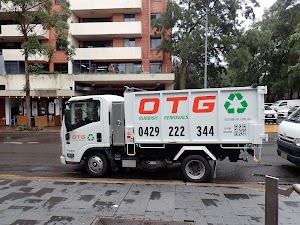
Rubbish removal and skip bins do the same job in fundamentally different ways: a removalist team arrives, loads everything, and leaves the same day, while a skip bin sits on your property for days or weeks while you fill it yourself. The right choice depends on your job type, what you’re throwing out, and whether your driveway and council approval can handle a bin. According to the Australian waste and resource recovery industry, skip bin hire and rubbish removal together account for the majority of residential waste diversion in metro areas (DCCEEW, 2023).
Not sure how much rubbish you actually have? The light load rubbish removal page explains how smaller jobs are priced and when a partial-truck service is the most cost-effective option.
The core difference is labour and timing. With rubbish removal, a crew does the lifting and loading on the day — you point, they carry. With a skip bin, the hire company drops off an empty container and you do all the sorting and loading yourself over however long the hire period runs. Skip bin hire nationally is a significant industry, with Australian households and businesses renting an estimated 5 million bins per year (IBISWorld, 2024).
Rubbish removal is a full-service model. You don’t move a thing. The team arrives, assesses the job, and hauls everything away in one visit.
Skip bin hire is a self-service model. You get a container for a set period — typically three to seven days — and you fill it on your own schedule. The bin company collects it when the hire period ends or when you call.
Neither model is universally better. They suit different jobs, different timelines, and different item types. The sections below break down each decision point honestly.
Cost depends heavily on job type and duration, not a simple dollar comparison. A 2023 IBISWorld report on waste collection services in Australia notes that price sensitivity among residential customers is highest for one-off jobs, where customers compare total cost-per-load rather than hire rates (IBISWorld, 2023). The two models have different cost structures, and each can be the better-value option depending on your situation.
Skip bins suit long renovation projects where waste accumulates over weeks. If you’re demolishing a bathroom, rebuilding a deck, or gutting a kitchen over a two-to-four week project, a skip bin sitting on-site lets you load incrementally. You’re paying one hire fee to cover the whole project duration, rather than booking multiple separate collection visits.
The self-service model also means the hire cost reflects container space only. If you can do the physical loading yourself and you have the time, a skip bin can be the leaner option for large, ongoing jobs.
For one-off clear-outs, rubbish removal is typically more cost-effective. You’re paying for a single visit with a quoted price that covers labour, loading, transport, and tip fees. There’s no hire duration risk, no permit cost, and no charge for the container sitting longer than expected.
One-off jobs include deceased estate cleanups, end-of-lease clear-outs, post-move declutters, and single bulky items like a fridge or mattress. These scenarios don’t need a bin on-site for days. A one-visit removalist job removes the rubbish and closes the problem the same day.
For most households, yes. Rubbish removal eliminates the physical loading work that skip bin hire requires. The Australian Bureau of Statistics reports that Australians working full-time average only 36 minutes of leisure time outside of work and domestic commitments on weekdays (ABS, 2022). That context matters: spending a weekend loading a skip bin is a real time cost that a removalist visit removes entirely.
With rubbish removal, you book a time, show the crew what’s going, and the job is done within hours. There’s no sorting, no heavy lifting, no squeezing items to fit a container’s dimensions.
In our experience, customers who estimate their skip bin loading time consistently underestimate by a factor of two to three. A pile that looks manageable over a weekend often takes considerably longer once access, weight limits, and prohibited items are factored in.
Skip bins do offer one time advantage: flexibility. If your renovation timeline slips or you need to stop and start over a few weeks, the bin waits for you. A removalist visit needs to be booked when the rubbish is ready.
This is where the two options diverge most sharply. Skip bins carry legal restrictions on certain categories of waste that many householders don’t discover until collection day. The NSW EPA lists refrigerants, hazardous household chemicals, and certain appliances as requiring specialist disposal pathways that standard skip bin operators are not licensed to handle (NSW EPA, 2024). Rubbish removalists with the correct licensing can accept several of these items.
Three of the most common household items that skip bin operators cannot legally take are fridges, washing machines, and mattresses. Fridges and washing machines contain refrigerants and other regulated materials requiring specialist handling. Mattresses are a separate category that most bin operators exclude due to weight and disposal facility restrictions.
If a mattress is part of your clear-out, a skip bin won’t solve that problem. The mattress disposal Australia guide covers the legal disposal options available and why rubbish removalists are the most straightforward path for most households.
The same restriction applies to white goods. The white goods disposal page explains why fridges and washing machines need a specialist collection, and what the correct disposal process looks like.
Even when an item is technically permitted in a skip bin, it has to fit. Large wardrobes, long timber lengths, pool fencing panels, and bulky garden structures often can’t be placed safely in a standard skip container. Rubbish removal crews cut oversized items down to a manageable size on-site if needed. A skip bin sitting in your driveway doesn’t solve that problem.
| Item | Skip Bin | Rubbish Removal |
|---|---|---|
| Fridge / freezer | No (legally restricted) | Yes |
| Washing machine / dryer | No (legally restricted) | Yes |
| Mattress | No (most operators) | Yes |
| Oversized / long items | May not fit | Cut down on-site |
| General furniture | Yes | Yes |
| Renovation debris (tiles, timber) | Yes | Yes |
| Green waste | Yes (most operators) | Yes |
Two practical problems with skip bins on residential properties get less attention than they deserve. First, skip bins placed on concrete or asphalt driveways can crack the surface under load. Second, open skip bins left on the kerb or driveway overnight regularly attract contributions from neighbours and passers-by. A 2022 survey of Sydney council waste officers found that illegal dumping into private skip bins was among the most frequently reported local nuisance complaints in residential areas (Local Government NSW, 2022).
A skip bin with a full load of renovation debris can weigh several tonnes. Standard residential concrete driveways are typically designed to handle the weight of a passenger vehicle, not a static multi-tonne load sitting in one spot for days. Cracking is a genuine risk, particularly on older concrete or block-paved surfaces.
Lawns are equally vulnerable. A heavy bin sitting on turf for a week will kill the grass beneath it and leave the ground compacted. Getting the lawn back takes time and replanting.
Rubbish removal trucks load from the kerb. The vehicle stays on the road; nothing sits on your driveway or lawn. There’s no surface damage risk.
An open skip bin on the street or driveway is visible to every passing neighbour. By morning, it’s not unusual to find extra bags, old furniture, and assorted rubbish that wasn’t there the night before. You hired the bin. You’ll pay for the extra weight at disposal.
Locking lids and tarpaulins help but don’t fully solve the problem. Rubbish removal sidesteps it completely. There’s no bin left unattended; the truck arrives, loads up, and leaves the same visit.
In most Sydney council areas, yes. When a skip bin is placed on a public road, nature strip, or footpath, a council permit is typically required before the bin is delivered. The permit process, fees, and lead times vary between councils. A 2023 review of local government waste policies by the NSW Department of Planning found that permit requirements for skip bins on public land apply across the majority of Greater Sydney council areas (NSW Department of Planning, 2023).
Some bin hire companies handle the permit application on your behalf, but many do not. Responsibility for compliance often falls on the property owner, and bins placed without a permit can attract council fines.
If the bin fits entirely within your private property, a permit is usually not required. But private driveways with the bin damage risk described above are then the only option.
Rubbish removal requires no permit of any kind. The truck pulls up, loads from the kerb, and drives away. There’s no application, no waiting period, and no compliance exposure for the householder.
The honest answer is that both options win in different scenarios. Neither is universally better. The table below maps common situations to the more appropriate choice, based on the practical factors covered above. Australian households generate an average of 2.7 tonnes of waste per year, much of which requires a managed disposal solution beyond the standard kerbside bin (NSW EPA, 2023).
| Your situation | Better choice | Why |
|---|---|---|
| Long renovation (2-6 weeks of ongoing waste) | Skip bin | Fill at your own pace; one hire fee covers the project |
| One-off clear-out (all waste ready now) | Rubbish removal | Single visit, no hire duration risk, crew does the loading |
| Fridge, washing machine, or mattress to remove | Rubbish removal | Skip bins legally cannot accept these items |
| Older or cracked concrete driveway | Rubbish removal | No bin weight on the surface; truck loads from kerb |
| No off-street space for a bin | Rubbish removal | No permit needed; truck loads kerbside and leaves |
| High foot-traffic street (dumping risk) | Rubbish removal | No unattended bin; neighbours can’t add to your load |
| Oversized items that need cutting down | Rubbish removal | Crew cuts items to size on-site; a skip bin can’t do that |
| Large volume of inert building waste (concrete, bricks) | Skip bin | Heavy material suits a static container at site |
| Apartment or unit with no driveway | Rubbish removal | Crew collects from inside; no space for a bin needed |
For long renovation projects where waste builds over several weeks, a skip bin is often the more practical choice. You fill it at your own pace without coordinating multiple pickups. Rubbish removal is better suited to one-off clear-outs where all the waste is ready to go at once. If your renovation is generating a steady stream of waste over a month or more, a skip bin can be the more cost-effective option for that specific job type.
No. Skip bin operators are legally prohibited from accepting fridges, washing machines, and most white goods because these appliances contain refrigerants and other materials requiring specialist disposal under Australian environmental law. Rubbish removalists with the correct licensing can legally collect and responsibly dispose of these items. See the white goods disposal guide for the full process.
Yes, in most cases. When a skip bin sits on a public road, footpath, or nature strip, a council permit is typically required before delivery. Rules and fees vary by council area across Greater Sydney. Some bin hire companies manage the application for you; many don’t. Rubbish removal trucks load from the kerb and leave promptly, so no permit is required for that process at all.
They can. A fully loaded skip bin can weigh several tonnes, and standard residential concrete driveways are not designed to handle a static multi-tonne load for days at a time. Cracking is a real risk, particularly on older surfaces. Lawns are equally vulnerable to weight and compaction. Rubbish removal trucks collect from the kerb, so nothing sits on your driveway or lawn at any point.
It’s genuinely difficult. An open skip bin left overnight is an invitation for neighbours and passers-by to add their own rubbish. Options include a lockable lid, a tarpaulin, or positioning the bin inside a locked gate. None of these are foolproof, and the extra weight goes to the tip at your expense. Rubbish removal avoids the problem entirely because there is no unattended bin left on your property.
Dealing with a mattress as part of your clear-out? Mattresses are one of the items skip bins most commonly refuse. The mattress disposal Australia guide covers the legal options and why a rubbish removalist is often the easiest route.
If your job involves white goods, mattresses, oversized items, or a one-off clear-out where you’d rather not spend a weekend loading a container, rubbish removal is the more straightforward option. No permits. No driveway risk. No bin sitting overnight attracting the neighbourhood’s contributions. The crew arrives, quotes on the spot, loads everything, and leaves the same day.
If you’re in the middle of a multi-week renovation and generating waste steadily, a skip bin genuinely makes sense. The self-service model works when the timeline is spread out and you can manage the loading yourself.
Not sure how much rubbish you actually have? The light load rubbish removal service is designed for jobs that don’t fill a whole truck. It’s worth checking before you book a full bin hire.