Australia recycled 63% of all waste generated in 2020-21, according to the National Waste Report 2022 (DCCEEW). That headline figure covers every stream, from construction rubble to commercial food waste. For household rubbish specifically, the recovery rate is lower. Municipal solid waste sat at roughly 57% in the same period, meaning more than four in ten kilograms of household rubbish still goes to landfill.
Australia generated approximately 74.1 million tonnes of waste in 2020-21, of which 46.5 million tonnes were recovered for recycling or reuse – a recovery rate of 63% (DCCEEW, National Waste Report 2022). That figure is up from 58% in 2016-17. Progress has been real, but the National Waste Policy Action Plan’s 80% target by 2030 means Australia still has a substantial distance to cover.
The 63% figure is a weighted average across all waste streams. Construction and demolition material, which is generated in large volumes and is relatively easy to sort, pulls the average up. Municipal solid waste – the rubbish that comes out of homes – sits below the headline figure and is harder to shift.
For context on how responsible disposal services contribute to those recovery figures, see OTG’s guide to sustainable rubbish removal.
Recovery rates vary enormously depending on the material. Metals and paper perform well because they have established markets and reliable sorting infrastructure. Plastics perform poorly because of contamination, mixed resin types, and thin end markets for low-grade material. The table below summarises best-available figures from the National Waste Report 2022 and supporting state data.
| Material stream | Recovery rate (2020-21) | Primary recovery pathway | Key constraint |
|---|---|---|---|
| Paper and cardboard | ~67% | Kerbside yellow-lid bin; commercial collection | Contamination from food residue and moisture |
| Glass | ~72% | Kerbside, container deposit schemes (CDS) | Breakage during kerbside collection reduces quality |
| Ferrous metals (steel, iron) | ~87% | Scrap dealers, resource recovery centres, appliance recycling | Low-grade mixed steel; household items mixed with construction scrap |
| Non-ferrous metals (aluminium, copper) | ~76% | Kerbside, container deposit, scrap dealers | Small items (foil, lids) lost in sorting process |
| Plastics | ~13-16% | Kerbside rigid plastics; limited drop-off for soft plastics | Mixed resin types, soft plastics collapse, thin end markets |
| Organics (food and garden) | ~57% | Green-lid FOGO bins, garden organics collection | FOGO rollout still incomplete across many councils |
| Hazardous waste | ~42% | Licensed hazardous waste facilities, drop-off events | Illegal dumping; household awareness gaps |
| E-waste | ~10-17% | National Television and Computer Recycling Scheme (NTCRS); drop-off | Low consumer awareness; many devices stockpiled or lost to landfill |
Sources: DCCEEW National Waste Report 2022; NSW EPA Waste and Resource Recovery data 2021-22; Australian Council of Recycling (ACOR) material-specific estimates.
The gap between ferrous metals (87% recovery) and plastics (13-16%) illustrates a structural problem rather than a behavioural one. Steel has established commodity markets and efficient collection. Most plastics do not. Sorting effort at home makes little difference if the material has nowhere to go once collected.
E-waste recovery is particularly low given the volume of devices Australians dispose of each year. The full picture on e-waste collection pathways is covered in the guide to e-waste disposal in Australia.
Municipal solid waste is the worst-performing major waste stream in Australia. Construction and demolition waste achieved a recovery rate of approximately 75% in 2020-21, and commercial and industrial waste reached around 63% – both above the household figure of 57% (DCCEEW, National Waste Report 2022). The structural reasons for this gap are worth understanding.
Construction and demolition material – concrete, timber, steel, bricks – is generated in large, relatively homogenous loads. Sorting it is more economical than sorting the mixed contents of a household bin. Demolition contractors also have a financial incentive to separate and sell materials where possible. Household waste, by contrast, arrives at processing facilities already mixed.
Commercial and industrial operators often generate single-stream waste – cardboard from a warehouse, food scraps from a restaurant, offcuts from a manufacturer. Single-stream collection is cleaner, less contaminated, and easier to process at scale. Homes generate a much wider variety of materials in the same bin, which increases contamination and reduces what can actually be recovered.
Households can’t replicate industrial-scale sorting, but they can make deliberate choices at the point of disposal. Separating materials before they’re mixed – keeping e-waste out of the general bin, returning white goods through proper channels, using container deposit schemes for glass and bottles – meaningfully improves the quality of what reaches processing facilities.
White goods are a good example. Proper disposal through a licensed removalist or recycling scheme diverts significant volumes of metal and refrigerant from landfill. The white goods disposal guide covers the right channels for fridges, washing machines, and other large appliances.
Household waste recovery in Australia operates across three main channels: kerbside collection, drop-off facilities, and professional collection services. The NSW EPA reported that kerbside collection alone diverted approximately 1.4 million tonnes of material from landfill in NSW in 2021-22 (NSW EPA, Waste and Resource Recovery Data 2021-22). Each channel handles different materials and serves different situations.
Kerbside bins handle the bulk of day-to-day household recycling. Most Australian councils now operate a three-bin system: general waste (red lid), recycling (yellow lid), and garden organics or food and garden organics – FOGO (green lid). Material collected in the yellow-lid bin goes to a materials recovery facility for sorting into paper, glass, metals, and rigid plastics.
Contamination is the main problem with kerbside recycling. The wrong item in the yellow-lid bin can render an entire load unprocessable. Common contaminants include soft plastics, food waste left in containers, and non-recyclable packaging that looks similar to recyclable material.
Drop-off facilities handle materials that kerbside can’t. Container deposit schemes (operating in NSW, Victoria, Queensland, South Australia, Western Australia, the ACT, the NT, and Tasmania) accept eligible glass and plastic bottles and aluminium cans. Hazardous waste drop-off events run by councils collect chemicals, batteries, and paint. E-waste drop-off points under the National Television and Computer Recycling Scheme accept screens, computers, and peripherals.
Drop-off requires the householder to take action separately from the regular bin routine. That extra step is where a significant volume of recoverable material is lost each year, either stockpiled at home or discarded in general waste.
Professional removal services play a recovery role that neither kerbside nor drop-off can cover. Large items, mixed loads from clear-outs, and items too heavy to transport to a tip are typically handled by a removal crew that takes material to a licensed facility for sorting.
In our experience handling residential clear-outs across Greater Sydney, the material mix in a typical cleanout job is highly sortable. Metals, timber, cardboard, and intact glass make up a large share of the load. These materials are reliably diverted from landfill when a licensed operator with facility relationships handles the collection.
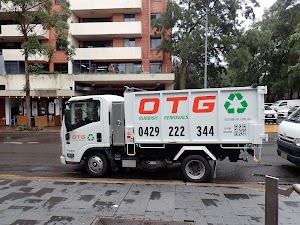
Australia’s average municipal solid waste recovery rate sits at approximately 57%, meaning roughly four in ten kilograms of household rubbish ends up in landfill. Professional rubbish removal services that prioritise sorting and diversion can perform significantly above that benchmark. At OTG, collected loads are taken to licensed facilities where materials are sorted and diverted from landfill where viable recycling or reuse pathways exist.
The key difference between kerbside and professional removal is sorting capability. A kerbside bin arrives at a materials recovery facility mixed. A professional operator can pre-sort at point of collection and direct materials to specialist facilities: scrap metal dealers, e-waste processors, timber recyclers, and hazardous waste handlers.
The materials most commonly diverted from landfill on OTG jobs are metals (particularly appliances and bed frames), timber from furniture and construction waste, and cardboard from moving or renovation clear-outs. These are also the materials with the strongest end markets and the highest confirmed recovery rates nationally.
Australia’s overall waste recovery rate reached 63% in 2020-21, but the household stream (municipal solid waste) performed below that at approximately 57%, according to the DCCEEW National Waste Report 2022. That means roughly four in ten kilograms of household rubbish still goes to landfill. Kerbside recycling, FOGO organics collection, drop-off schemes, and responsible professional removal all contribute to that recovery figure.
Ferrous metals (steel and iron) achieve the highest recovery rate, at approximately 87%, followed by glass at around 72% and non-ferrous metals (aluminium, copper) at roughly 76%, according to the National Waste Report 2022 (DCCEEW). Paper and cardboard recover at about 67%. Plastics are the weakest performer at 13-16%, held back by mixed resin types, contamination, and limited end markets for low-grade material.
Soft plastics (bread bags, cling wrap, frozen food packaging) currently have no consistent kerbside pathway in Australia following the collapse of the REDcycle programme in 2022. Polystyrene foam, contaminated food packaging, composite packaging (plastic-bonded paper or metal), and heavily soiled cardboard are rarely recovered. Sharps, asbestos, and certain household chemicals require licensed hazardous waste disposal and cannot enter any standard recycling stream.
Yes. Australia’s overall recovery rate rose from 58% in 2016-17 to 63% in 2020-21, according to successive DCCEEW National Waste Reports. The National Waste Policy Action Plan targets 80% recovery by 2030. Organics diversion has improved most through FOGO rollouts. Plastics and e-waste still lag furthest behind. Closing the remaining gap will require infrastructure investment and stronger end markets, not just better household sorting habits.
Australia’s recycling data shows that what happens at the point of disposal matters. Material that enters a kerbside bin mixed with contamination is often lost. Material that reaches a specialist facility – scrap metal, e-waste processor, timber recycler – is reliably recovered. A household clear-out is one of the few moments where a deliberate choice about the disposal pathway directly changes the outcome.
Choosing a professional removal service that sorts loads and uses licensed facilities keeps your materials inside the recovery chain rather than adding to the 57% of household waste that still ends up in landfill.
Read more about how responsible disposal works in practice: the sustainable rubbish removal guide covers OTG’s approach to diversion. For specific item types, see the guides on e-waste disposal and white goods disposal.